


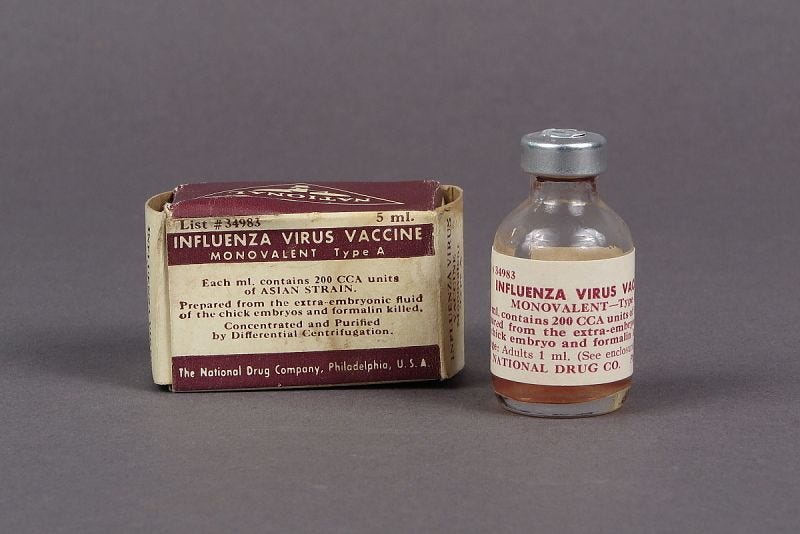
The 1957 influenza pandemic, caused by an H2N2 strain that emerged in East Asia and quickly spread worldwide, killed an estimated 1 to 4 million people globally and roughly 116,000 people in the United States alone, a toll that would dominate headlines for years if it happened today. Outside specialist public health circles, it barely registers in popular memory at all.
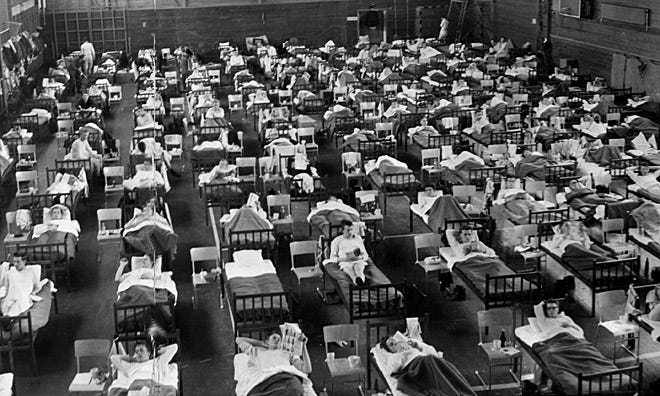
Part of the reason is timing. The pandemic arrived barely a decade after the far larger, more traumatic 1918 outbreak was still within living memory for many families, and its comparatively lower death toll made it feel, in the moment, like a lesser event even as it killed more Americans in a single year than most wars of the era combined.
A Vaccine Response That Actually Worked in Time
Microbiologist Maurice Hilleman, then working at Walter Reed Army Institute of Research, read a newspaper report about a mysterious respiratory illness spreading through Hong Kong in April 1957 and recognized the potential for a serious pandemic before most public health officials had taken notice.
Hilleman obtained a sample of the virus, confirmed it was a novel strain unlike recent seasonal flu, and coordinated with vaccine manufacturers to begin production months before the virus reached the United States in full force. Roughly 40 million doses were distributed domestically by the time the pandemic’s fall wave hit, a genuinely fast turnaround for 1957 vaccine technology and one credited with meaningfully reducing the American death toll compared to what an unprepared response would likely have produced.
A pandemic that public health intervention visibly blunted doesn’t generate the same lasting cultural trauma as one that overwhelmed every available response, and 1957’s comparatively contained impact, especially set against 1918’s scale, meant it never became the defining historical reference point for pandemic disease the way its predecessor did.
Hilleman went on to develop or substantially improve more than 40 vaccines over his career, including those for measles, mumps, rubella, and hepatitis B, a body of work public health historians credit with saving more lives than perhaps any other individual scientist in modern medicine, even though his name remains far less recognized publicly than his impact would suggest.
A Third Overlooked Pandemic Followed Barely a Decade Later
The 1968 Hong Kong flu, an H3N2 strain, killed roughly 1 million people worldwide and around 100,000 Americans, arriving just over a decade after 1957 and receiving a broadly similar level of lasting public attention, which is to say very little, reinforcing a pattern where pandemics that don’t collapse a society’s basic functioning tend to fade from collective memory quickly once they end.
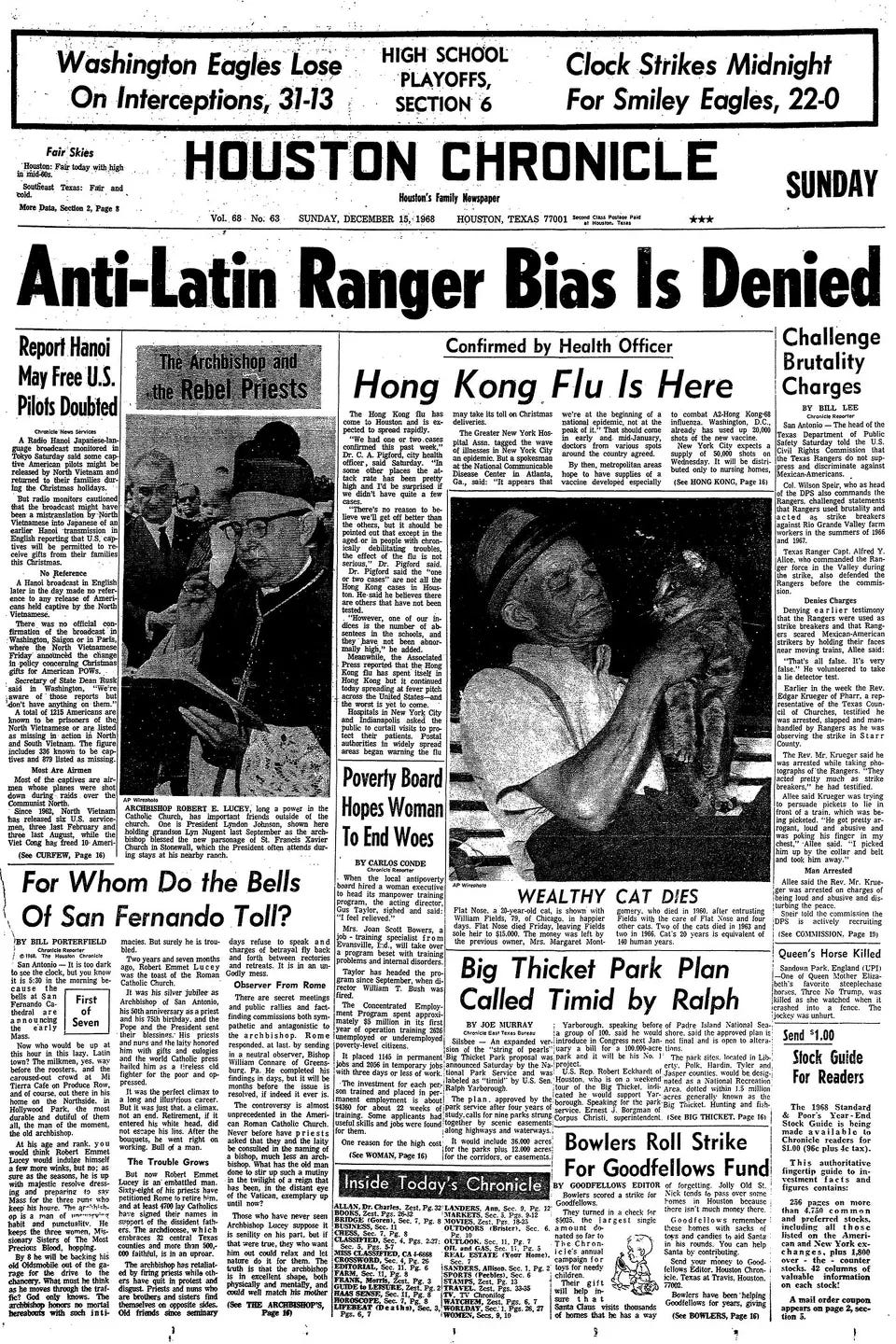
Schools in many American cities stayed open throughout the 1968 pandemic’s peak, and public gatherings largely continued as scheduled, a strikingly different official response than the aggressive closures and mandates that would later define pandemic response in the 21st century, reflecting both a different scientific understanding of respiratory virus transmission and a cultural tolerance for ongoing risk that later generations would find difficult to imagine accepting.
How the 1957 Response Shaped Later Pandemic Planning
Hilleman’s rapid identification and vaccine coordination effort became something of an internal case study for American public health planners in the decades that followed, cited repeatedly as an example of what an unusually fast, well-coordinated scientific response to an emerging pandemic threat could accomplish even with the comparatively limited biotechnology available in the late 1950s.
Modern pandemic preparedness planning, including the surveillance networks and rapid vaccine development pipelines built up over subsequent decades, owes a conceptual debt to exactly the kind of early recognition and swift coordinated action Hilleman demonstrated was possible in 1957, even though the specific virus, technology, and global public health infrastructure involved have all changed almost beyond recognition since then.
Hilleman reportedly kept a chicken coop behind his own home specifically to supply fertilized eggs for early-stage vaccine experiments, a detail that captures just how improvisational even landmark 20th century biomedical research could still be, built as much from personal persistence and resourcefulness as from institutional funding and laboratory infrastructure.
Historians of medicine often point to 1957 as a useful counterexample whenever pandemic response gets discussed in purely fatalistic terms, evidence that a fast-moving respiratory virus with genuine global reach does not automatically guarantee the kind of societal disruption 1918 caused, provided the surrounding public health response is organized quickly enough and taken seriously by the officials and manufacturers positioned to act on it.

The 1957 influenza pandemic’s lessons were not absorbed, leaving public health systems unprepared for COVID-19. This lack of preparedness, coupled with delayed recognition, uneven communication, and vaccine challenges, exacerbated the impact of COVID-19.
I remember all that: but I never got any of the famous flus . . .