



Sid Hatfield was shot dead on courthouse steps in Welch, West Virginia, in May 1921, by Baldwin-Felts agents who were never meaningfully punished for it. Hatfield had been the Matewan police chief who sided with striking coal miners against the private security firm mine owners used to crush union organizing, and his killing, carried out in broad daylight, was the spark that convinced thousands of miners armed resistance was the only option left.
By late August, roughly 10,000 miners were marching through Logan County intent on breaking mine owners’ grip over the region’s coalfields, where miners were paid in company scrip, housed in company towns, and subject to eviction at the whim of owners who also controlled local law enforcement in practice. What followed became the largest armed labor uprising in American history since the Civil War.
Trenches, Machine Guns, and a Sheriff on the Payroll
Sheriff Don Chafin, effectively bought and paid for by mine owners, assembled a defensive force of roughly 3,000 deputized citizens, private guards, and volunteers, dug into Blair Mountain’s ridgeline with machine guns and prepared positions. Five days of actual combat followed, trenches, coordinated defensive lines, casualty estimates ranging from single digits into the dozens or more depending on the source, since chaotic conditions and deliberate underreporting have left historians without a fully reliable count even a century later.
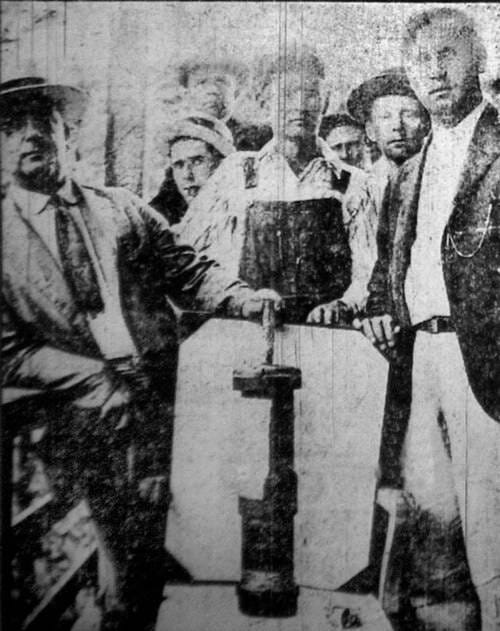
Private aircraft hired by mine owners, and later US Army aircraft, flew reconnaissance over miners’ positions. Multiple documented accounts describe improvised bombs, some war-surplus ordnance left over from World War One, being dropped on those positions, one of the first recorded uses of aerial bombardment against American civilians on domestic soil. At least one bomb reportedly failed to detonate and was later recovered intact, giving historians physical evidence for a detail that would otherwise sound implausible.