

The Immigrants Who Helped Win America Its Independence
Nearly half of Washington’s army wasn’t yet considered American. Here’s who actually filled the ranks.

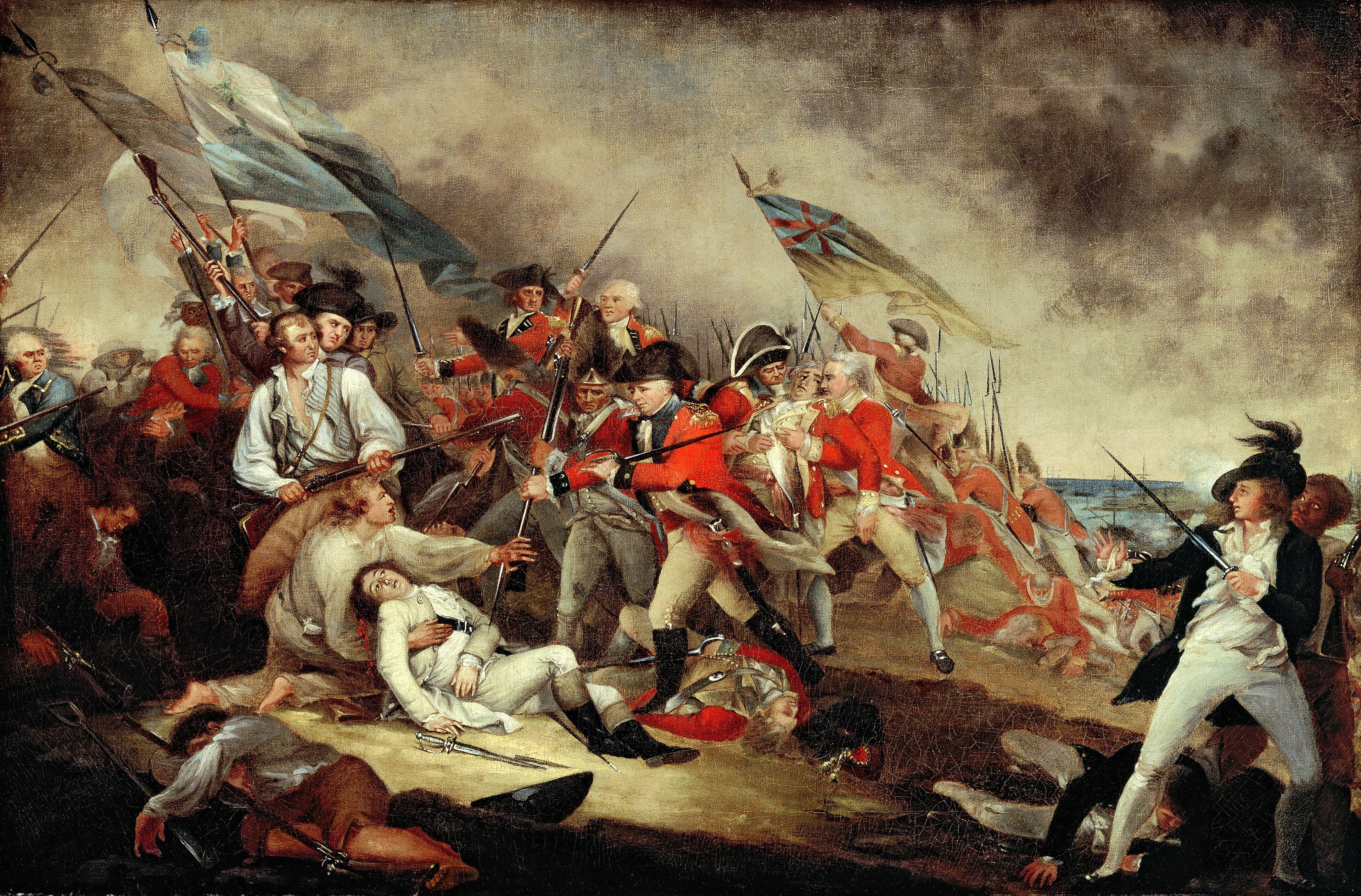
When military historians count up who actually filled the ranks of George Washington’s Continental Army, the numbers complicate the story most Americans grew up with. People of Irish birth or immediate descent made up roughly a quarter to half of the army at various points in the war, despite representing barely a tenth of the colonial population. The Revolution is remembered today through portraits of Founding Fathers in powdered wigs. On the ground, it was fought disproportionately by people those Founders would not have called fellow countrymen when the war began.
Most of these soldiers weren’t fleeing persecution in some abstract sense. Catholic Irish families had spent generations under Britain’s Penal Laws, which stripped Catholics of the right to vote, hold office, own land above a certain value, or educate their children in their own faith. Presbyterian Scots-Irish settlers from Ulster faced their own discrimination back home and arrived in America in massive numbers throughout the early 1700s, settling the frontier regions of Pennsylvania, Virginia, and the Carolinas. Both groups came to America already carrying a grudge against the British crown that the Revolution let them finally act on.
John Barry, born near the Irish coast around 1745, immigrated to Philadelphia as a teenager and became one of the Continental Navy’s most effective captains, commanding ships that harassed British supply lines throughout the war. When a British admiral later tried to bribe him into defecting, Barry answered that no amount of money or rank could seduce him from the cause of his adopted country. George Washington eventually named him the first commissioned officer of the United States Navy, a title that earned him the nickname father of the American Navy.
The Spies and the Printers
Not every contribution came from the battlefield. Hercules Mulligan, a tailor born in County Derry, ran a fashionable clothing shop in New York City that catered to British officers and loyalist elites. At the suggestion of his friend Alexander Hamilton, Mulligan used his access to overhear plans and pass them along to Continental intelligence, reportedly helping foil at least one plot against Washington’s life. Lydia Barrington Darragh, a Quaker woman from Dublin living in occupied Philadelphia, is said to have listened through a keyhole while British officers planned a surprise attack in December 1777, then made her way through enemy lines to warn Washington’s forces in time.
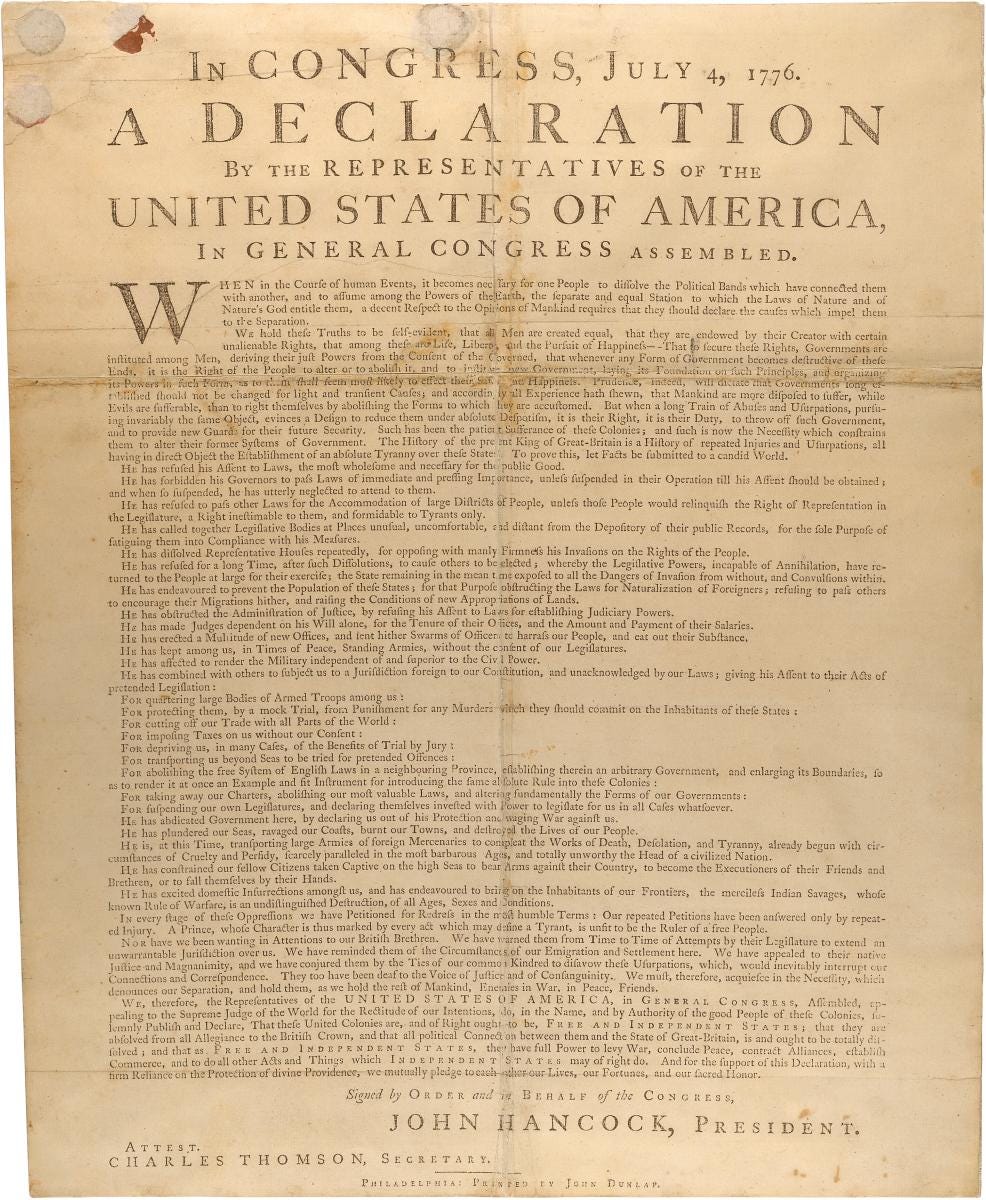
John Dunlap, an Irish-born printer in Philadelphia, had already built the colonies’ first daily newspaper before the war started. On the night of July 4, 1776, the Continental Congress handed him the newly approved Declaration of Independence and asked him to print it immediately. Dunlap ran off somewhere between 100 and 200 broadsides that night, working through darkness so copies could reach the colonies as fast as possible. Only 26 of those original Dunlap broadsides are known to survive today, and they remain the earliest printed copies of the document in existence.
Charles Thomson, born near Londonderry and brought to America as a boy, spent fifteen years as secretary of the Continental Congress, keeping the young government’s records through the entire war. In 1782, Congress asked him to finalize a design for the new nation’s Great Seal, and Thomson chose the bald eagle that still appears on American currency and passports today. A detail so familiar it barely registers as a choice at all was decided by a man who had crossed the Atlantic as an immigrant child.
A Debt the Founding Story Rarely Pays
Eight of the 56 men who signed the Declaration of Independence were of Irish descent, and nine of Washington’s generals were born in Ireland. An Irish politician later claimed that Irish valor had decided the outcome of the war, and that the Irish language was spoken as commonly as English in some parts of the American ranks. Both claims carry an obvious bias, but the underlying pattern holds up under closer research: immigrants and their children did not simply support the Revolution from the sidelines. They filled its officer corps, financed its printing, and staffed its intelligence networks.

Cross-Atlantic influence ran in both directions once the war ended. Watching the American colonies successfully break from British rule inspired a wave of Irish nationalism back home, and in 1791 a group calling itself the Society of United Irishmen organized with the explicit goal of ending British control of Ireland using the same revolutionary language Americans had used fifteen years earlier. That rebellion, launched in 1798, was crushed, and thousands died in the fighting and the reprisals that followed. It pushed a fresh wave of Irish immigrants toward America in the following decades, many of them descendants of families who had already sent sons to fight under Washington.
None of this makes the Revolution any less American. It makes the definition of American considerably more complicated than the story usually told on the Fourth of July, built years before anyone actually born in the colonies had cast a vote on the matter, by people who had barely finished learning the geography of their new home.
So here’s what I keep coming back to: if the men filling out Washington’s officer corps, print shops, and spy networks were still, by law, foreigners when they enlisted, how much of what we now call American identity was actually assembled after the fact?