


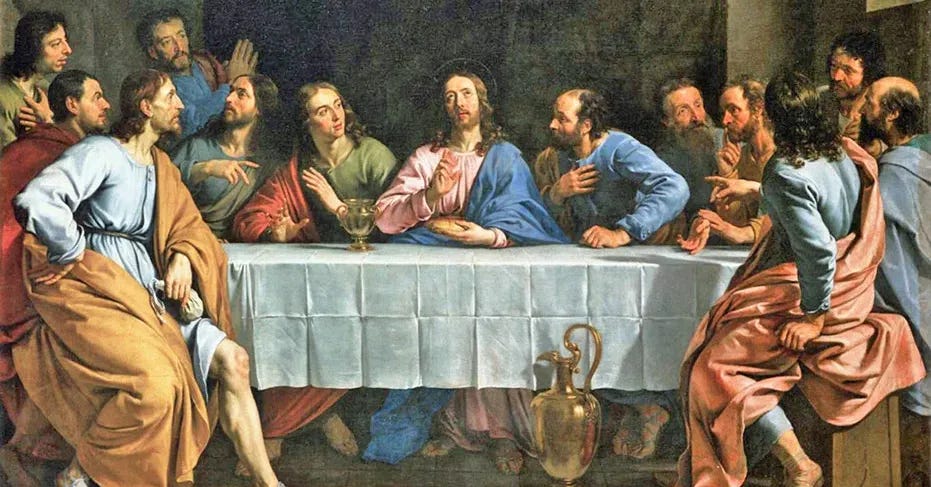
Matthew, Mark, and Luke explicitly present the Last Supper as a Passover meal. John’s chronology is more difficult: a common reading places Jesus’s crucifixion around the time Passover lambs were being prepared, which would put the meal before Passover began. Other scholars read John differently, so the accounts are best described as presenting an apparent chronological tension rather than unquestionably incompatible timelines. The question has occupied biblical scholarship for centuries because it bears directly on how early Christians understood the meal’s meaning.
A Calendar Almost Nobody Talks About
Second Temple Judaism did not operate with one universally accepted way of reckoning sacred time. Jerusalem’s official calendar was lunisolar, while texts associated with the Qumran community preserve a different, fixed 364-day calendar tradition, often called “solar” in shorthand. Works such as the Book of Jubilees and the Temple Scroll place festivals on predictable days of the week rather than dates determined by lunar observation. Strictly speaking, however, scholars also describe this as a schematic 364-day calendar, since its method for keeping pace with the true solar year remains uncertain.
The best-known attempt to use this calendar difference to reconcile the Gospel accounts came from biblical scholar Annie Jaubert, not physicist Colin Humphreys. Jaubert proposed that Jesus may have observed Passover according to a Qumran-style calendar, which would place the meal on Tuesday evening, while John’s account followed the Jerusalem lunisolar calendar. Humphreys later advanced a different two-calendar reconstruction, arguing for a Wednesday Last Supper rather than the traditional Thursday.