


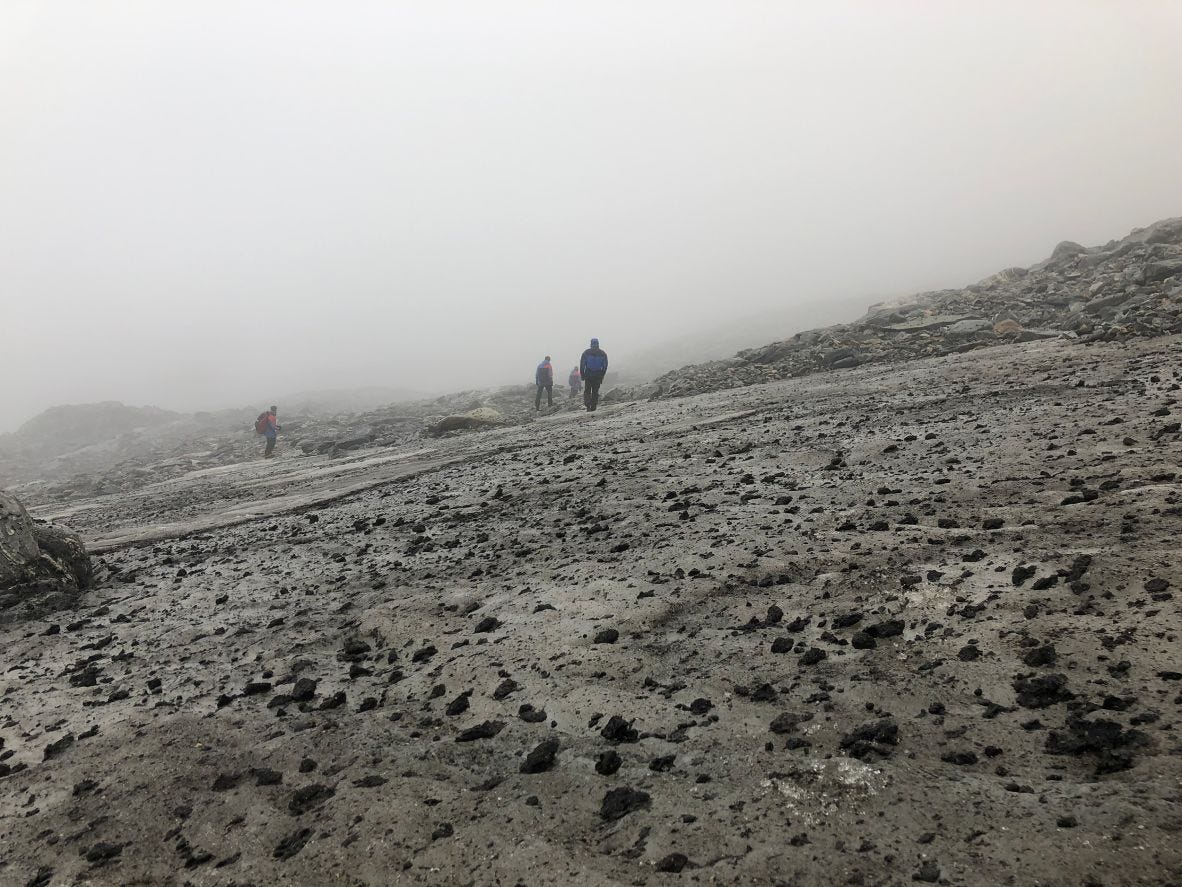
High in the mountains of Oppland, Norway, a shrinking patch of ice called the Lendbreen glacier has spent the last decade returning objects it swallowed roughly a thousand years ago. Warmer summers have pulled the ice back further with each passing year, and every retreat exposes another layer of preserved leather, wood, and wool that has been frozen solid since before the Black Death arrived in Scandinavia. Archaeologists now consider Lendbreen one of the richest ice sites in the world, not because of any single spectacular find, but because of how completely ordinary most of what it holds actually is.
Researchers quickly realized the site was a mountain pass, not a campsite or a burial ground. Radiocarbon dating on more than 60 recovered objects shows people used this route continuously from around 300 CE through the mid-1300s, with the busiest period of traffic falling squarely within the Viking Age. Travelers moving goods and animals between farming valleys and summer pastures used the pass as a practical shortcut through terrain that would otherwise take days to cross on foot.
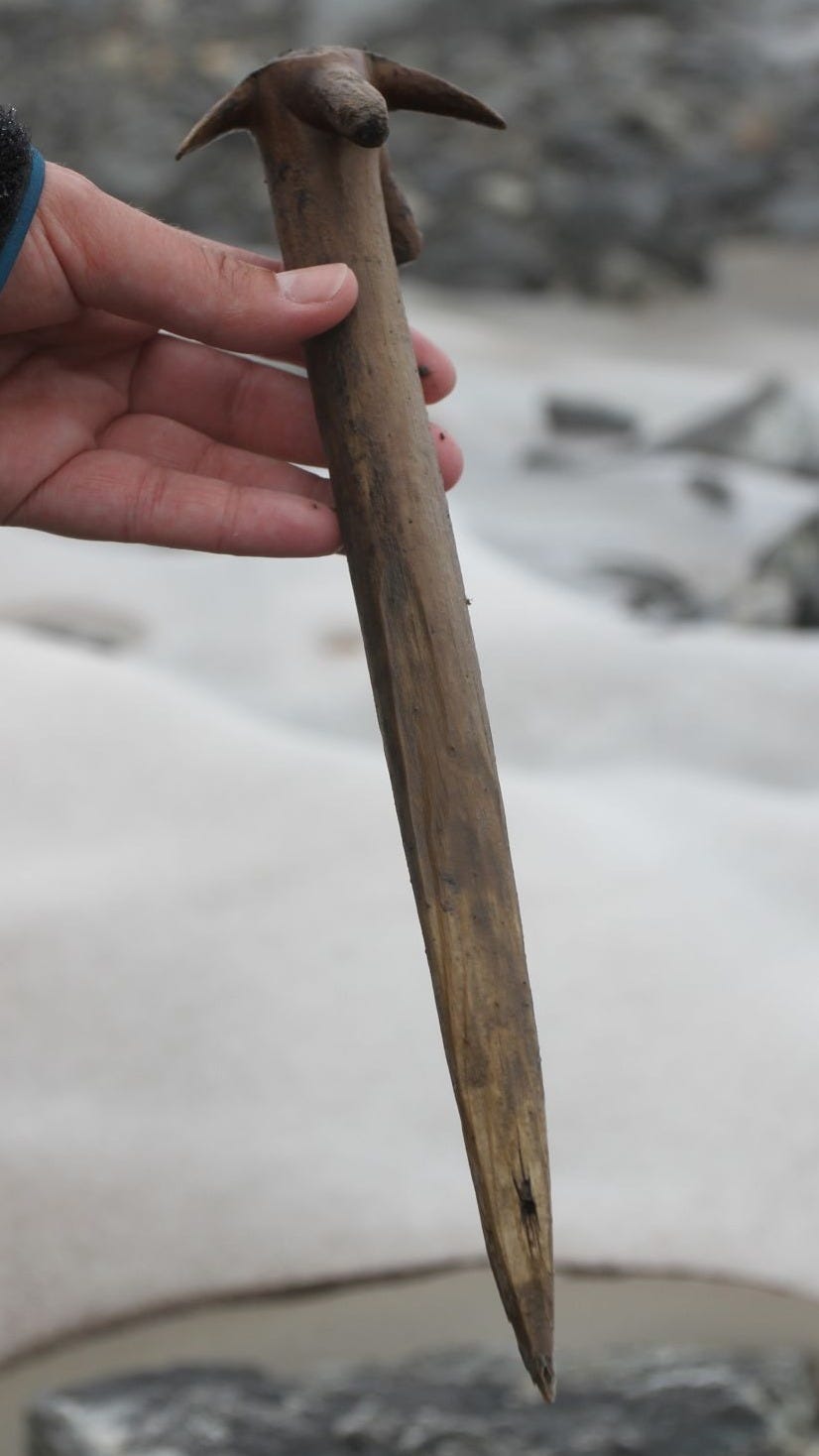
What makes Lendbreen valuable to historians is exactly what makes it unglamorous: it preserved the equipment of everyday travel rather than the treasures of kings. Archaeologists have recovered a wooden whisk, complete outfits of shoes and mittens, a small dog leash still tied in a knot, and a functional wooden ski still fitted with its leather binding, tools nobody at the time would have considered worth burying with honor. A walking stick carved with a runic inscription referring to a servant boy was found among the debris, offering a rare direct line to someone who wasn’t a chieftain, a king, or a warrior.
Norwegian archaeologist Lars Pilo, who leads the glacial archaeology program known as Secrets of the Ice, has spent over a decade combing the retreating margins of Lendbreen and dozens of other ice patches across the Jotunheimen mountains. His team published the pass’s full excavation results in the journal Antiquity in 2020, cataloguing more than a thousand individual artifacts recovered from the site since systematic surveys began in 2011, after an especially warm summer stripped away enough ice to reveal stone cairns marking the old route for the first time in centuries.
Why the Pass Went Silent
Use of the route dropped off sharply after 1350, right around the time the Black Death swept through Norway and killed an estimated half of the country’s population. Fewer farmers meant fewer herds moving between valleys, fewer travelers willing to risk difficult mountain terrain, and eventually fewer reasons to maintain a route that depended entirely on regular traffic to stay usable. Within a couple of generations, the pass over Lendbreen simply stopped getting used, and the ice quietly closed back over centuries of footprints.
An uncomfortable irony drives the whole discovery. The same warming climate destroying glaciers worldwide is the reason archaeologists can study this pass at all, and that same warming is now the reason they are racing to recover what they can before it disappears again, this time for good. Organic material that survived a thousand years frozen in ice degrades within weeks once exposed to open air, so every summer the glacier retreats, researchers have a narrow window to reach whatever surfaces before wind, sun, and scavenging animals destroy it permanently.
A Different Kind of Viking Story
Popular imagination pictures the Viking Age as longships, raids, and coastal trade, but sites like Lendbreen point to a much larger domestic economy running entirely over land, through mountain passes most tourists never see today. Farmers moving reindeer antler, dairy products, and hides between summer pastures and permanent settlements needed exactly this kind of route, and the volume of ordinary gear recovered suggests the pass saw fairly heavy regular use rather than occasional expeditions.
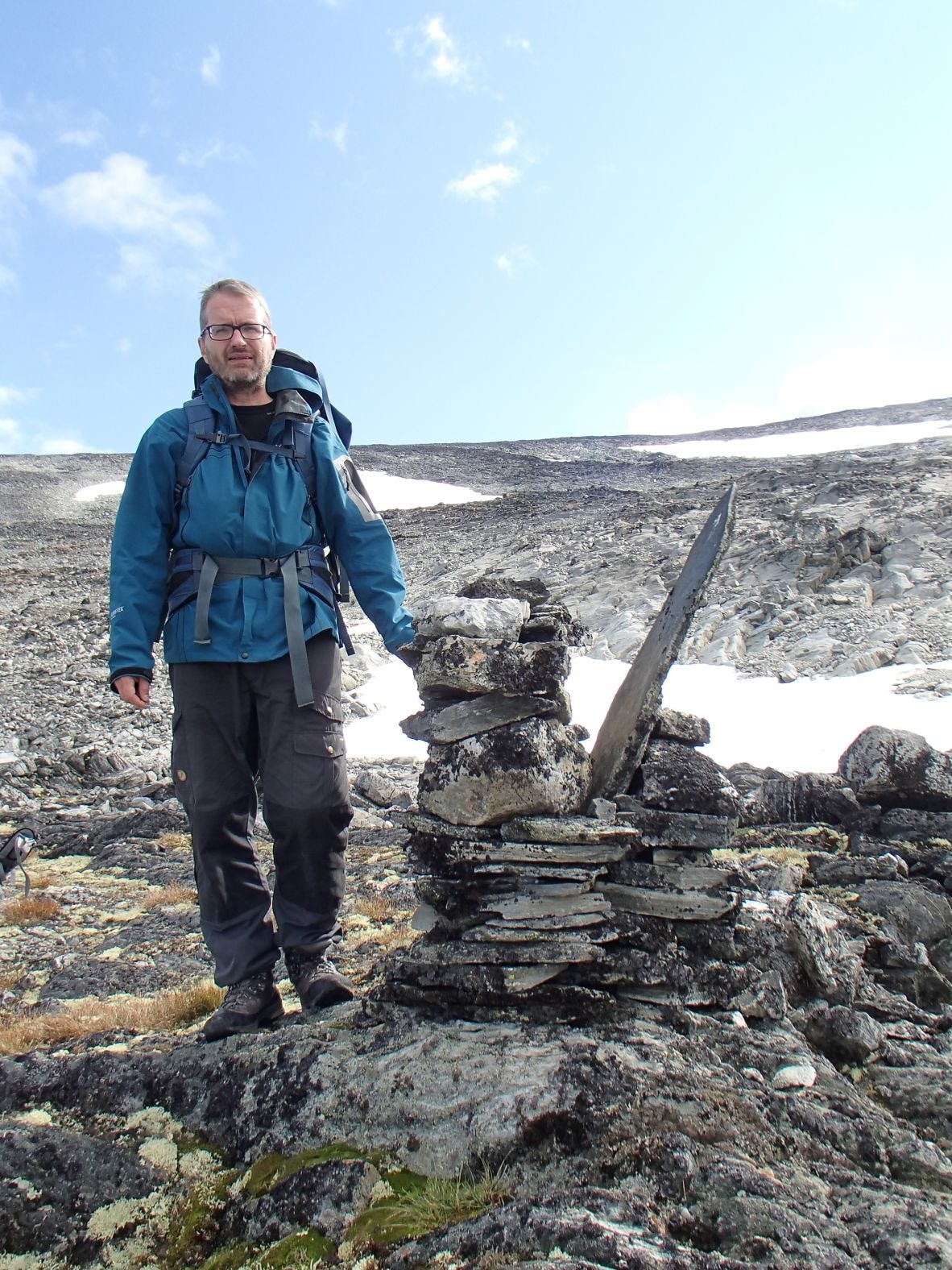
Among the more telling finds are wooden snow markers once used to guide travelers safely around dangerous ice patches, along with the preserved remains of a wooden sled and horse dung dated to the same centuries, proof the route regularly carried pack animals rather than just travelers on foot. Fragments of iron and soapstone recovered nearby suggest the pass also moved raw materials down from highland deposits toward valley settlements, not just seasonal dairy goods.
Glacial archaeology sites like this one are opening up across Scandinavia, the Alps, and the Rockies as ice retreats worldwide, and each one adds detail to a version of history that never had much reason to write itself down. A servant boy’s walking stick survived a thousand years by accident, in conditions nobody could have planned for, and now says more about daily life in the Viking Age than most sagas ever bothered to record.
How much of ordinary history has already been lost simply because the ice that could have preserved it never had the chance to melt in time for us to find it?

So 1,000 years ago Norway was warmer than today, and the Black Death happened in a time of global cooling.