


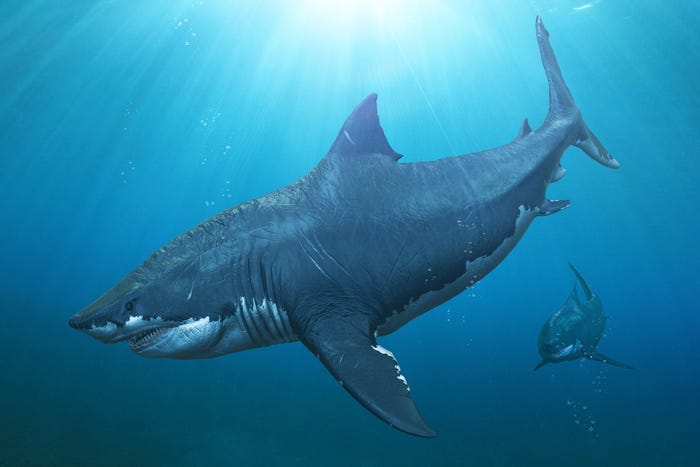
Megalodon, the extinct giant shark that patrolled oceans worldwide roughly 23 to 3.6 million years ago, remains one of the largest predatory fish ever to exist, with length estimates from various studies commonly landing somewhere between 50 and 60 feet, built almost entirely from tooth fossils and a handful of rare vertebral remains since shark skeletons are cartilage and rarely fossilize intact.
Explaining how any animal reaches that scale requires more than just abundant prey and a long evolutionary runway. A 2020 study published in the journal Historical Biology proposed a genuinely unsettling piece of the puzzle: megalodon pups may have been eating each other before they were even born.
A Womb That Doubled as a Competition
The behavior in question is called intrauterine cannibalism, or oophagy, and it isn’t a megalodon-specific theory invented from nothing. Several living shark species, including the modern sand tiger shark, are documented practicing exactly this behavior today, with the largest, most developed embryo in each uterus consuming its smaller siblings and unfertilized eggs before birth, leaving only one or two pups born per uterus despite dozens of eggs being fertilized initially.
Researchers studying megalodon vertebrae growth bands, which record year-by-year growth the way tree rings do, estimated newborn megalodons may have already measured somewhere around 6 to 7 feet at birth, an unusually large size for a newborn of any species and consistent with pups that had already outcompeted and consumed their siblings for months inside the womb before ever entering open water. For comparison, great white sharks are generally about 4 feet long at birth, so the estimated megalodon newborn (about 6.6 feet long) would have been substantially larger than a newborn great white, though far smaller than an adult great white.
That head start would matter enormously for a predator’s lifetime size. Entering the ocean already several feet long and developmentally advanced would give a young megalodon a massive survival advantage over smaller newborn predators and potential prey alike, compounding across each animal’s lifespan and, over enough generations, potentially compounding across the species’ evolutionary trajectory toward ever larger maximum size.
Why the Theory Remains a Reasonable Guess, Not a Settled Fact
No fossil evidence directly proves megalodon embryos cannibalized each other in the womb, since soft tissue and unborn shark embryos essentially never fossilize. The entire argument rests on inference: modern relatives practice oophagy, megalodon newborns appear unusually large based on vertebral analysis, and large size at birth is a plausible, if unconfirmed, explanation connecting the two observations.
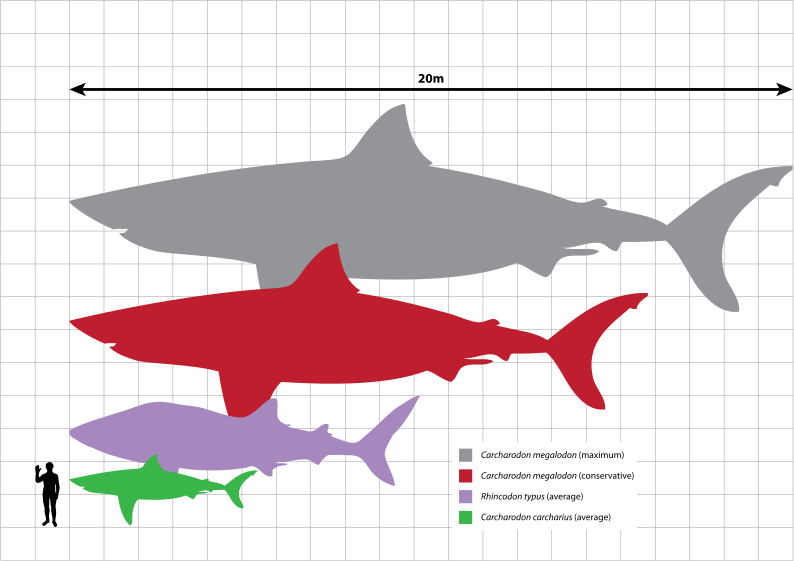
Megalodon’s exact size at maximum adulthood is itself still debated among paleontologists, since estimates built entirely from isolated teeth and a small number of partial vertebral columns require extrapolating a whole animal’s proportions from fragments, a method that carries real uncertainty even when done carefully. Popular size claims sometimes exceed what the more conservative published estimates actually support, and a 2021 study using different modeling assumptions than earlier work argued the shark may have had a proportionally longer, leaner body than the great-white-shark-style silhouette usually used to reconstruct it.
What Actually Killed Off an Apex Predator This Successful
Megalodon’s extinction, generally placed around 3.6 million years ago, likely resulted from a combination of pressures rather than one single cause. Cooling global temperatures during that period shrank the warm coastal nursery habitats young megalodons likely depended on, while the diversification of marine mammals and the rise of faster, more agile competing predators, including early great white sharks, may have squeezed both its food supply and its ecological niche simultaneously.
Popular culture has run considerably further with megalodon than the fossil record supports, most visibly in films imagining the species as still secretly alive in deep ocean trenches today. No credible physical evidence, fossil or otherwise, supports a surviving population, and marine biologists studying deep sea environments generally treat the idea as entertaining fiction rather than a serious scientific hypothesis, given how much documented deep sea exploration has occurred without producing a shred of qualifying evidence.
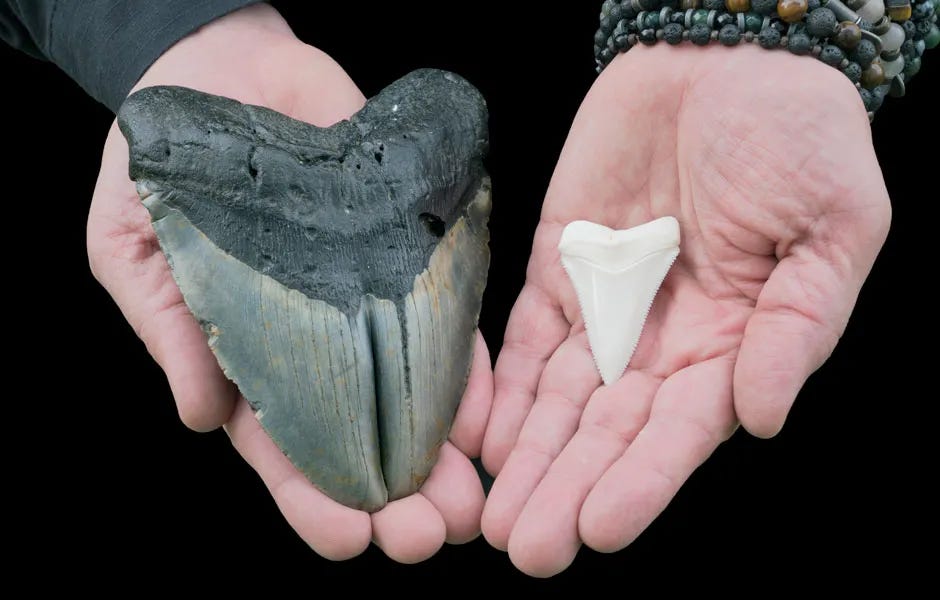
Individual megalodon teeth remain relatively common fossil finds along certain coastlines, particularly in parts of the southeastern United States, and the largest confirmed specimens measure over 7 inches long, a size that alone helps explain why 19th century naturalists first encountering these fossils sometimes assumed they belonged to an entirely different, even larger category of ancient creature before comparative anatomy settled the question. Fossil collectors and museums have built an entire minor industry around these teeth precisely because they are common enough to collect responsibly while still being visually dramatic enough to anchor a museum display on their own, with prices for smaller, common specimens remaining quite affordable even as truly enormous, pristine examples fetch serious money at auction.
If being a survivor started before birth, how much of megalodon’s fearsome reputation actually began in the womb rather than in the open ocean?
