


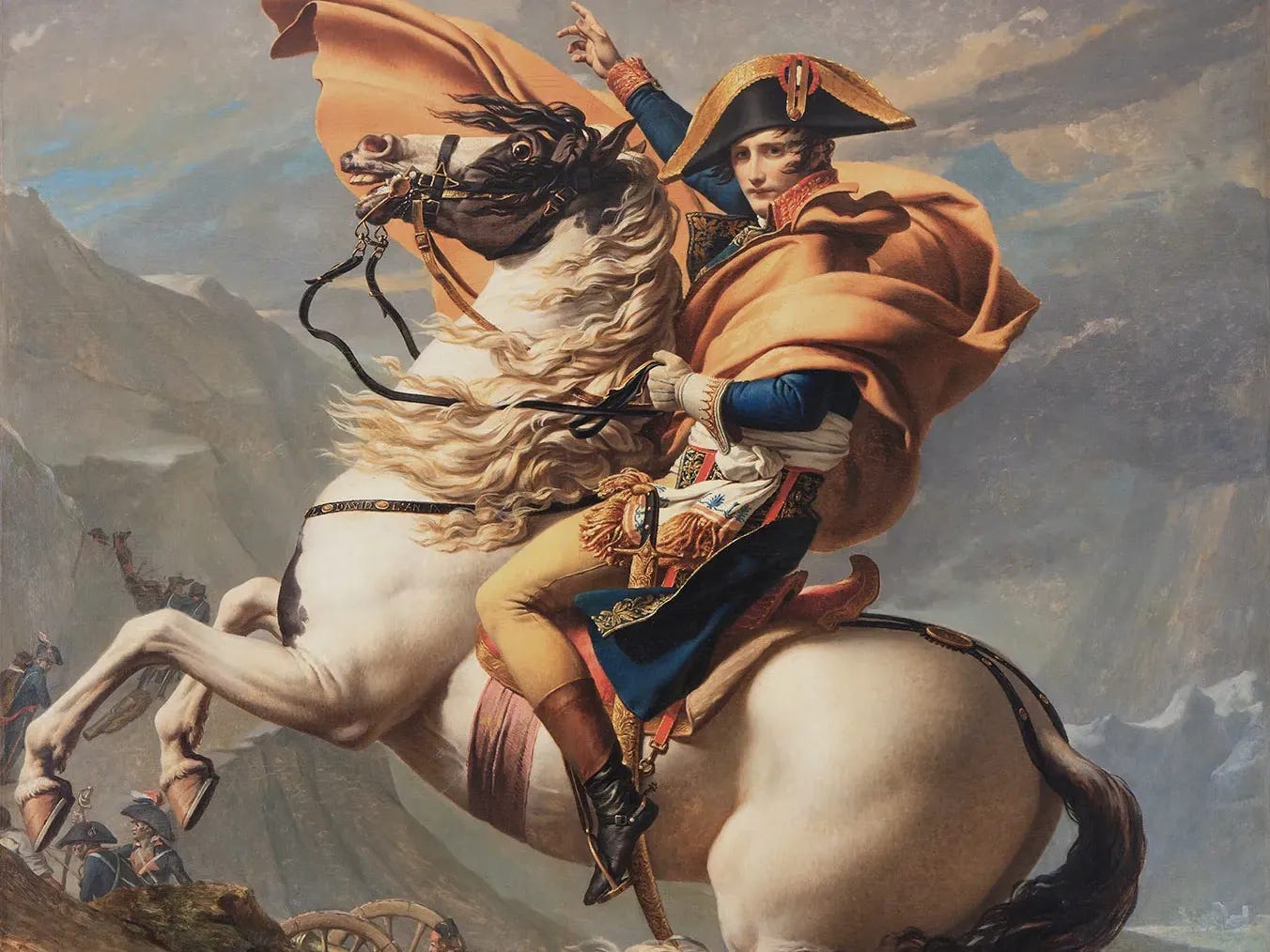
Napoleon Bonaparte stood approximately 5 feet 6 to 5 feet 7 inches tall by modern measurement, a height solidly within the average range for a Frenchman of his era, not the diminutive figure popular imagination has assigned him for the past two centuries.
Confusion over Napoleon’s actual height stems partly from a genuine measurement discrepancy: French records at the time of his death listed him at 5 feet 2 inches, using the French measurement system of the period, which used a longer inch than the English inch. Converted properly into English units, that same French measurement equals almost exactly 5 feet 7 inches, erasing the apparent discrepancy entirely once the correct conversion is applied.
The Cartoonist Who Made It Stick
British caricaturist James Gillray produced a series of enormously popular satirical prints during the Napoleonic Wars depicting Napoleon as a small, petulant, tantrum-prone figure, using exaggerated shortness as visual shorthand for pettiness and impotent rage against a genuinely feared military and political rival.
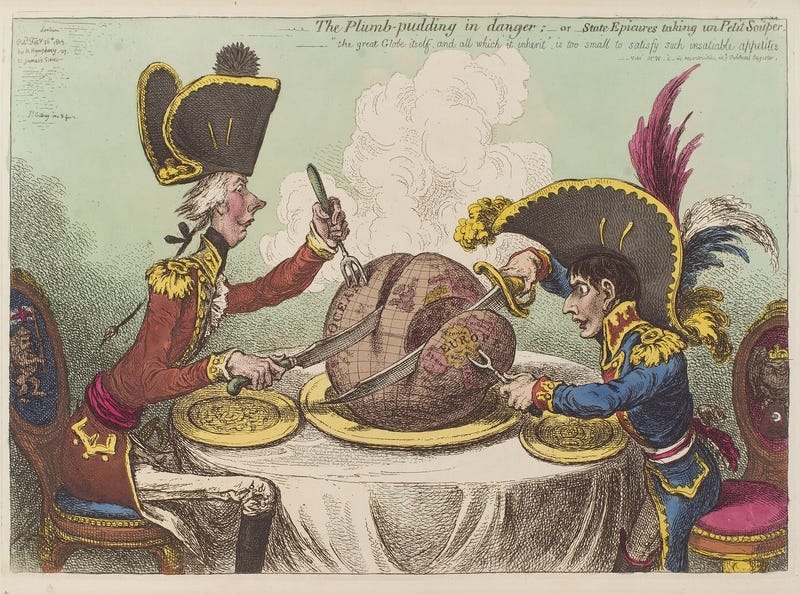
Gillray’s prints circulated widely across Britain and, through international reproduction and later reprinting, well beyond it, cementing an image of a physically diminutive Napoleon in the public imagination at a scale and speed no factual correction could easily match, especially in an era without any real mechanism for widely correcting a viral visual falsehood.
Political cartooning as a genre specifically thrives on this kind of exaggeration, and Gillray was operating within an established British tradition of using physical caricature to diminish rival nations’ leaders, one that predates Napoleon considerably and continued well after him, with height serving as a particularly easy, visually legible shorthand for weakness regardless of a subject’s actual stature.
French soldiers reportedly called Napoleon le petit caporal, the little corporal, a nickname widely misunderstood outside France as a literal reference to his height when it actually functioned as an affectionate, morale-boosting term among troops, closer in spirit to a modern nickname implying approachable camaraderie rather than physical mockery.
That linguistic misunderstanding, layered on top of Gillray’s already widely circulated caricatures and the initial measurement discrepancy, created a mutually reinforcing set of separate reasons for the short-Napoleon myth to take hold, each one lending false credibility to the others even though none of them actually held up under closer examination.
Napoleon’s actual height has been documented and correctly explained by historians for decades, yet the myth persists in popular culture largely because it serves a satisfying narrative purpose entirely independent of historical accuracy, the idea of a small man compensating for his stature through outsized ambition and aggression, a psychological trope now generally known as Napoleon complex despite resting on a factual premise that was never true.

Napoleon’s physician, along with several attendants present at his autopsy following his death in exile on the island of Saint Helena in 1821, recorded his measurements directly in French units of the period, giving historians a documented, contemporaneous starting point rather than relying on secondhand estimates or artistic depictions of uncertain reliability.
Comparing Napoleon’s recorded height against average heights for Frenchmen of his generation, drawn from military conscription records that routinely measured recruits, places him squarely within, and by some estimates slightly above, the average range for his era, directly contradicting the popular image of him as unusually small even by the standards of his own contemporaries.
Napoleon wasn’t unique in receiving this kind of physically diminishing caricature treatment from a hostile press. British satirists of the era regularly employed similar tactics against other rivals and even domestic political figures, using exaggerated physical features as convenient, instantly readable shorthand for character flaws in an age before mass literacy made purely text-based political argument as universally accessible as an image.
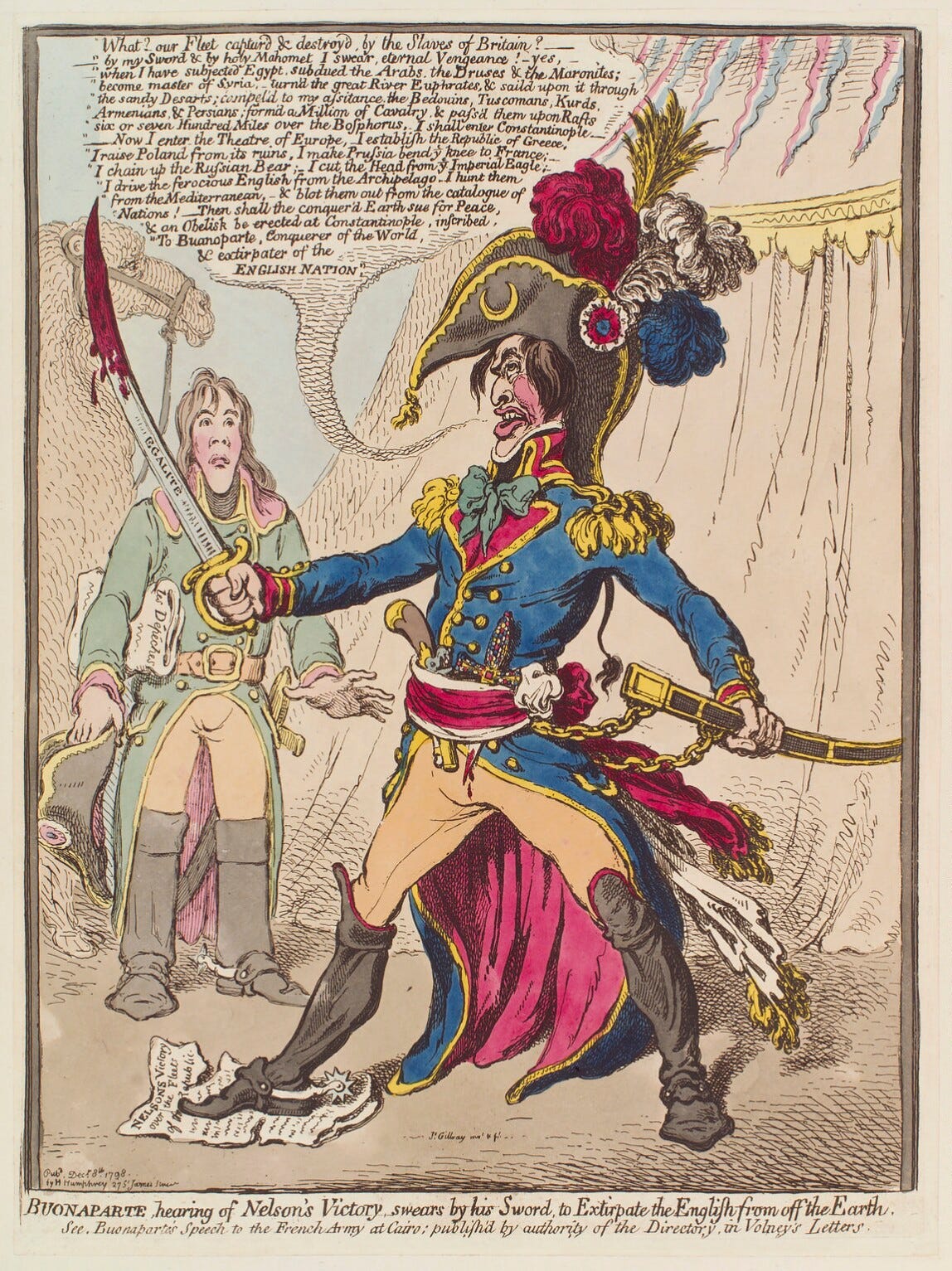
What made Gillray’s Napoleon caricatures uniquely durable compared to other similarly exaggerated political cartoons of the period was the sheer scale and duration of the Napoleonic Wars themselves, giving his imagery two full decades of sustained relevance and repeated republication to embed itself in public consciousness far more permanently than a typical short-lived political cartoon controversy ever could.
The propagandists always will try to demean a formidable opponent using outlandish means the moral of their own society is at stake.