

Otzi the Iceman’s Last Meal and What It Tells Us About His Murder

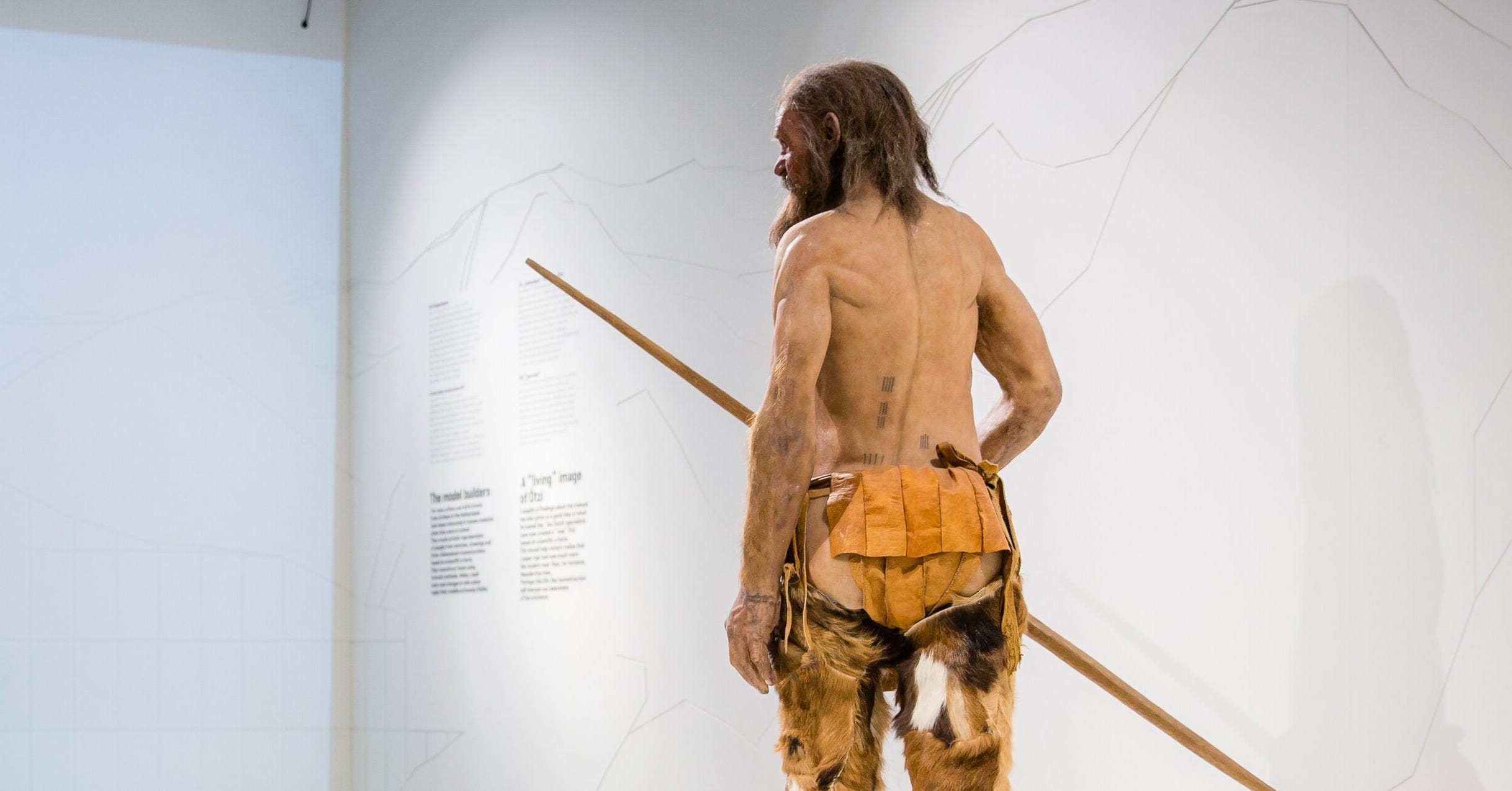
Otzi the Iceman, preserved in his display case at the South Tyrol Museum of Archaeology, Bolzano, Italy.
In September 1991, two German hikers crossing a glacier in the Alps near the Italian-Austrian border stumbled across a body. They assumed it was a recent casualty a hiker or mountaineer who had died and been preserved by the cold. By the time researchers arrived, it was clear they were dealing with something considerably older.
Otzi the Iceman died approximately 5,300 years ago. He is the oldest naturally preserved human mummy ever found in Europe, and over the past three decades he has been analyzed more thoroughly than almost any other ancient individual. His genome has been sequenced. His gut microbiome has been partially reconstructed. His last meal has been identified with remarkable precision. And forensic analysis of his remains has produced what amounts to a detailed case file for a murder that happened in the Copper Age.
What His Last Meal Reveals
In 2019, researchers published the most detailed analysis yet of Otzi’s stomach contents, revealing that he ate a large meal approximately 30 to 60 minutes before he died. The meal was substantial: red deer meat, ibex meat, einkorn wheat, and various plants including bracken fern. The fat content was notably high the researchers identified adipose tissue and bone marrow residue suggesting he had specifically consumed fatty cuts of meat.
This is not what someone who expects to die eats. A person fleeing for their life, exhausted and aware of danger, does not stop for a full meal including bone marrow an hour before death. The forensic implication is that Otzi did not know he was about to be killed. He stopped somewhere, ate a substantial meal with companions or in a settled location, and was then ambushed.
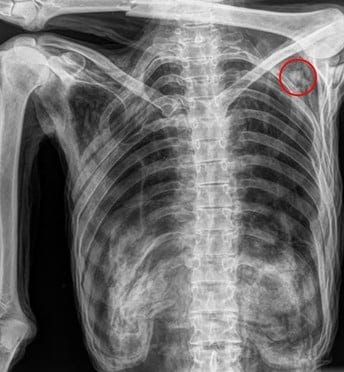
The cause of death was established in 2001: an arrowhead lodged in his left shoulder had severed the subclavian artery. He would have bled out within minutes. The arrow came from behind and below, indicating his attacker was lower on the slope and shot him from a distance while he was moving uphill or standing on higher ground. Otzi would not have seen it coming.
A Cold Case with Forensic Detail
The physical evidence on Otzi’s body builds a surprisingly specific picture of his final days. His right hand showed deep cuts between the thumb and index finger classic defensive wounds, consistent with grabbing the blade of a knife during a struggle. These wounds had begun to heal, suggesting the fight happened several days before his death, not immediately before it.
His equipment was in poor condition. The copper axe he carried itself extraordinary, one of the earliest complete copper axes ever found was in good shape, but his bow was unfinished and his quiver contained arrows that were not yet ready for use. He had been on the move for a while, possibly in difficult circumstances, without time to complete his gear.
Blood from four different individuals was found on his clothing and weapons. One profile appeared on his knife blade, two on an arrow in his quiver, and one on his coat. These were not his own blood types. The interpretation carefully stated by researchers as a possibility rather than a certainty is that Otzi had been involved in a serious conflict in the days before he died, possibly killing or wounding others, and was himself being tracked by people with reason to want him dead.
Who Was He, Really?
Recent genomic research published in 2023 substantially revised earlier assumptions about Otzi’s ancestry and appearance. Earlier reconstructions, which became iconic in museums worldwide, depicted him as a pale, light-haired man. The 2023 analysis showed he almost certainly had dark skin, dark eyes, and was significantly balder than the reconstructions suggested traits more consistent with populations that had not yet developed the skin depigmentation associated with later European farmers.
His ancestry was overwhelmingly derived from early Anatolian farmers who had migrated into Europe. He had almost no ancestry from Western Hunter-Gatherers, which was surprising given his Alpine location. This suggests the hunter-gatherer populations that had inhabited the region before the farming migrations had, by Otzi’s time, been almost entirely absorbed or displaced.
He was between 40 and 50 years old when he died elderly by Copper Age standards. He had arthritis in his joints, Lyme disease markers in his DNA, and evidence of several prior injuries. His teeth showed wear patterns consistent with using them as tools. He was, in modern terms, a working man who had lived a physically hard life and survived long enough to accumulate enemies.
What nobody can tell us is why he was killed. The physical evidence establishes the how with considerable precision. The why the motive, the identity of his killers, whether this was personal or political, whether the earlier fight days before his death was connected is gone. Five thousand years is a long time for motives to survive.
What strikes me is how much we now know about a single person who died before writing existed in Europe. We know what he ate for his last meal, what infections he was carrying, who his distant ancestors were, and roughly how he spent his final days. We just do not know why he died. Which raises a question worth sitting with: if we found a body today, in 7,000 years, what would future researchers be able to reconstruct about the last day of your life and what would remain permanently out of reach?

A Fragment of the Iliad Found Inside a Mummy Rethinks How Greeks Were Used in Egyptian Burial Magic
References
Dickson, J. H., et al. (2000). The omnivorous Tyrolean Iceman: Colon contents (meat, cereals, pollen, moss and whipworm) and stable isotope analyses. Philosophical Transactions of the Royal Society B, 355(1404), 1843-1849.
Maixner, F., et al. (2019). The Iceman’s last meal consisted of fat, wild meat, and cereals. Current Biology, 29(12), 2348-2355.
Olalde, I., et al. (2023). Revised genomic analysis of Otzi the Iceman. Current Biology.
Pernter, P., et al. (2007). Radiologic proof for the Iceman’s cause of death. Journal of Archaeological Science, 34(11), 1784-1786.
Zink, A., & Maixner, F. (2019). The current state of Otzi research. Gerontology, 65(6), 699-706.
One possibility is that he went into a village where he was outlawed, perhaps due to the fight days before. He had his meal before he was discovered, and then he ran out of the village, pursued by a posse. Since he still had the copper axe, robbery wasn't the motive for killing him, but vengeance fits.
Wow! Thanks a very interesting article about Otzi. That's the most detailed description I've ever read about who he was and what he was really like!