

Italian Teenagers Found a 1,800-Year-Old Roman Villa Under Their School Gym
Rome keeps hiding its history in plain sight, and it keeps taking curious teenagers to find it.

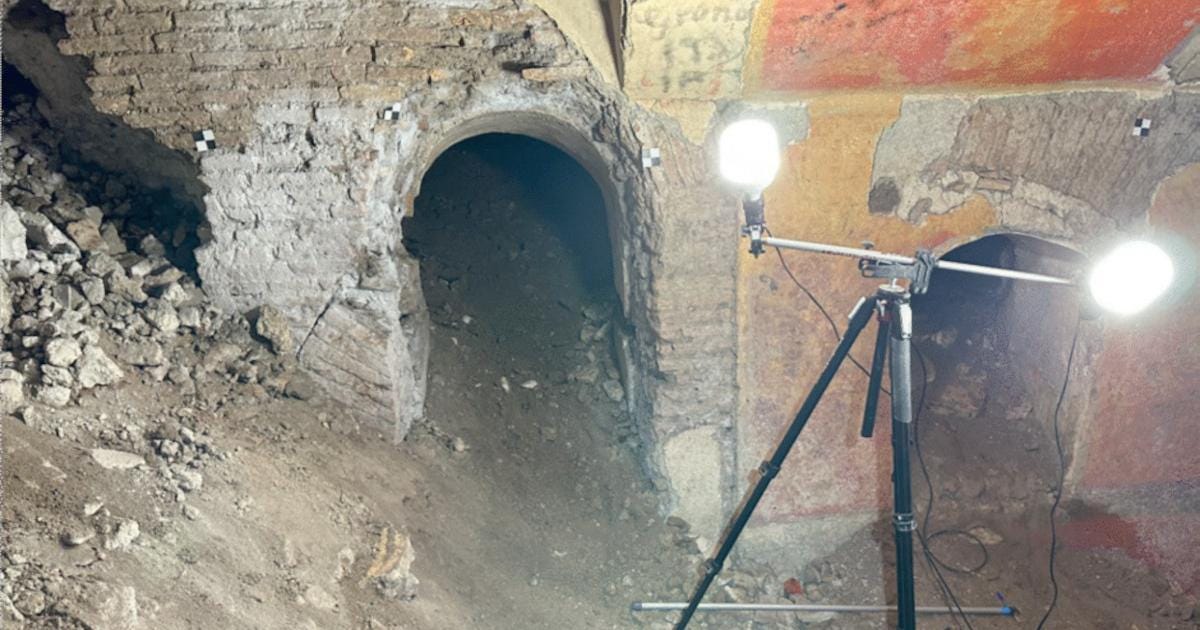
For years, students at Liceo Scientifico Cavour in Rome traded rumors about a set of sealed rooms hidden somewhere beneath their school gymnasium. Nobody in an official capacity took the stories seriously until several students slipped down through an old opening on their own, without permission, and returned with photographs of frescoed walls and decorated ceilings that looked nothing like plumbing access or storage space. They brought their find to Claudia Marino, their history and Latin teacher, who reported it to Rome’s heritage authorities rather than dismissing it as another school legend.
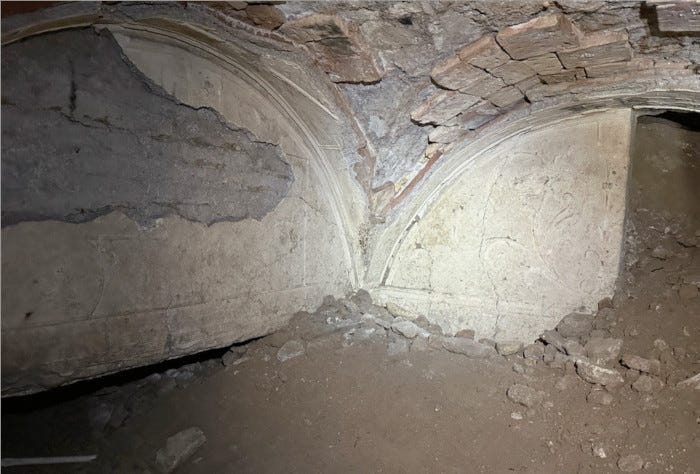
Excavation did not begin until January 2026, months after the initial report, once archaeologists confirmed the rooms were genuine and worth the resources required to investigate them properly. What they found beneath the gym floor turned out to be part of a large, luxurious second century Roman house, complete with figurative and floral frescoes, elaborate stucco decoration on vaulted ceilings, and a mosaic floor made from large, irregularly shaped stone tiles, a decorating style that was fashionable among wealthy Romans during that period.
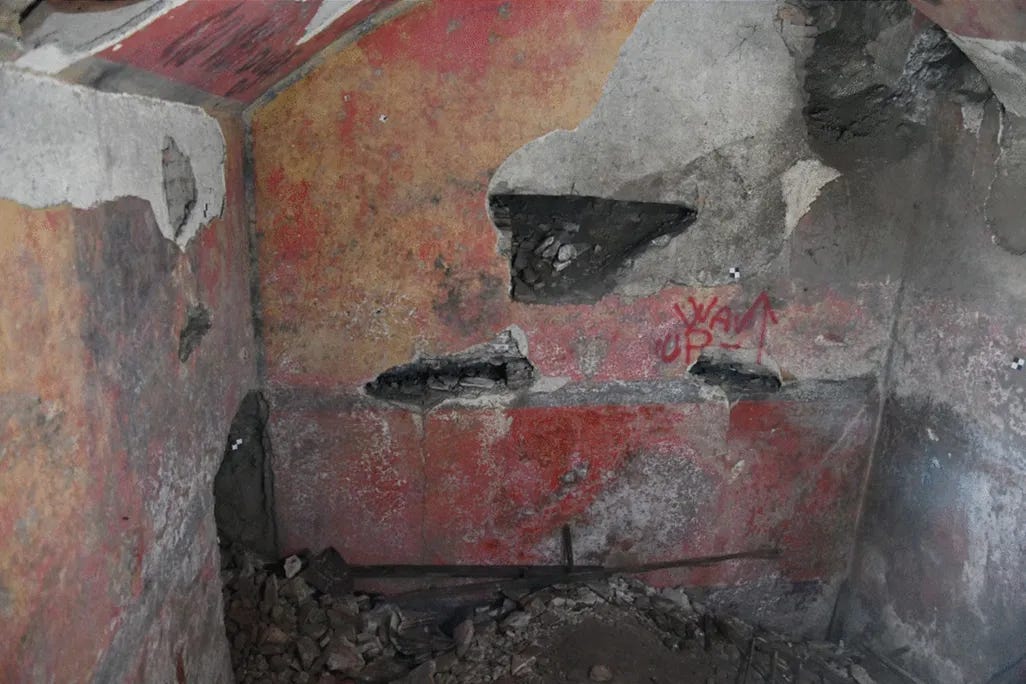
Alongside the ancient decoration, excavators also found more recent graffiti scratched into the walls by decades of unauthorized visitors, tourists, and previous generations of curious students who had clearly found their way into the space long before this particular group made an official report. Layered directly on top of second century plasterwork, the graffiti forms its own small timeline of everyone who has quietly known about this space and kept the secret largely to themselves.
An inscription recovered during renovation work on the school building back in the late 1800s, long before anyone suspected an intact villa sat underneath, suggests the house may have belonged to a family called the Umbrius, possibly originally from Samnium in south-central Italy, near what is now Pompeii. Archaeologists have started calling the site the Domus Liceo Cavour, tying its modern identity permanently to the students who found it rather than to whatever grander name it may once have carried.
Only a fraction of the complex has been mapped so far, but early measurements suggest a residence spanning multiple interconnected rooms arranged around what was likely a central courtyard, consistent with the layout wealthy Roman families favored for entertaining guests and displaying status through art and architecture rather than simply providing shelter.
A Neighborhood Built on Top of Itself
Liceo Cavour sits in Rione Monti, one of Rome’s oldest neighborhoods, a short walk from the Colosseum, in an area once home to Cicero, Pompey, and the future emperor Augustus. Despite that pedigree, Monti remains comparatively under-excavated, not because archaeologists lack interest, but because a functioning modern neighborhood, full of apartment buildings, businesses, and schools, sits directly on top of it. Digging requires either a willing property owner, a building collapse, or, in this case, a group of curious teenagers with a flashlight and no fear of getting in trouble.
Archaeologist Filippo Coarelli of the University of Perugia joined Marino in presenting the discovery to the public on May 28, alongside details of what excavators found and what still remains unexplored. Only a portion of the villa has been opened up so far, since the rest extends beneath the occupied sections of the school building, and further excavation depends on funding and on how much disruption the school can tolerate while classes remain in session.
The Students Who Found It Might Show You Around
Rome’s heritage authorities and the school have discussed working together to eventually open the site to visitors, with the possibility of current students training as guides for a house their predecessors discovered by accident. If that plan goes forward, the Domus Liceo Cavour would join a small category of archaeological sites where the story of the discovery is arguably as compelling as the discovery itself, an ancient Roman house whose modern chapter began with a school rumor nobody in charge wanted to investigate.
Accidental discovery has an odd pedigree in Rome. Sometime around 1480, a Roman is said to have fallen through a hole in the ground near this same part of the city and dropped into a painted chamber that turned out to belong to the Domus Aurea, Emperor Nero’s lost Golden House, sealed and buried under later construction after his death. Renaissance artists including Raphael reportedly had themselves lowered into the ruins by rope to study the strange painted decoration by torchlight, and the word grotesque, describing that unfamiliar style, comes directly from grotta, the Italian word for the cave-like rooms they were exploring. More than five centuries later, a group of bored teenagers repeated the same basic move with slightly better lighting.
Cities built directly on top of their own history eventually run out of places to dig without disturbing somebody’s basement, gymnasium, or parking garage. Most of what remains buried under Rome will likely stay that way for decades, discovered eventually by accident, the same way this villa was, rather than through any planned excavation.
How much more of ancient Rome do you think is sitting quietly under buildings nobody has any reason to suspect yet?

Didn't check on other sources, so just in case of a translation hiccup, the italian Gymnasio, like the german Gymnasium, are a type of school, intended to lead to the needed qualification (Maturita, Matura, Abitur, A-levels) to enroll in a university, with Liceo being one of two available orientations (language, arts and humanities), and has nothing to do with a gym. That said, there might well be a gym available.
I’m sure there’s quite a number of sites still buried beneath currently occupied buildings. Rome has only begun to scratch its (sub) surface.