

Stonehenge’s Bones: The Burial Site That Rewrites What We Thought We Knew

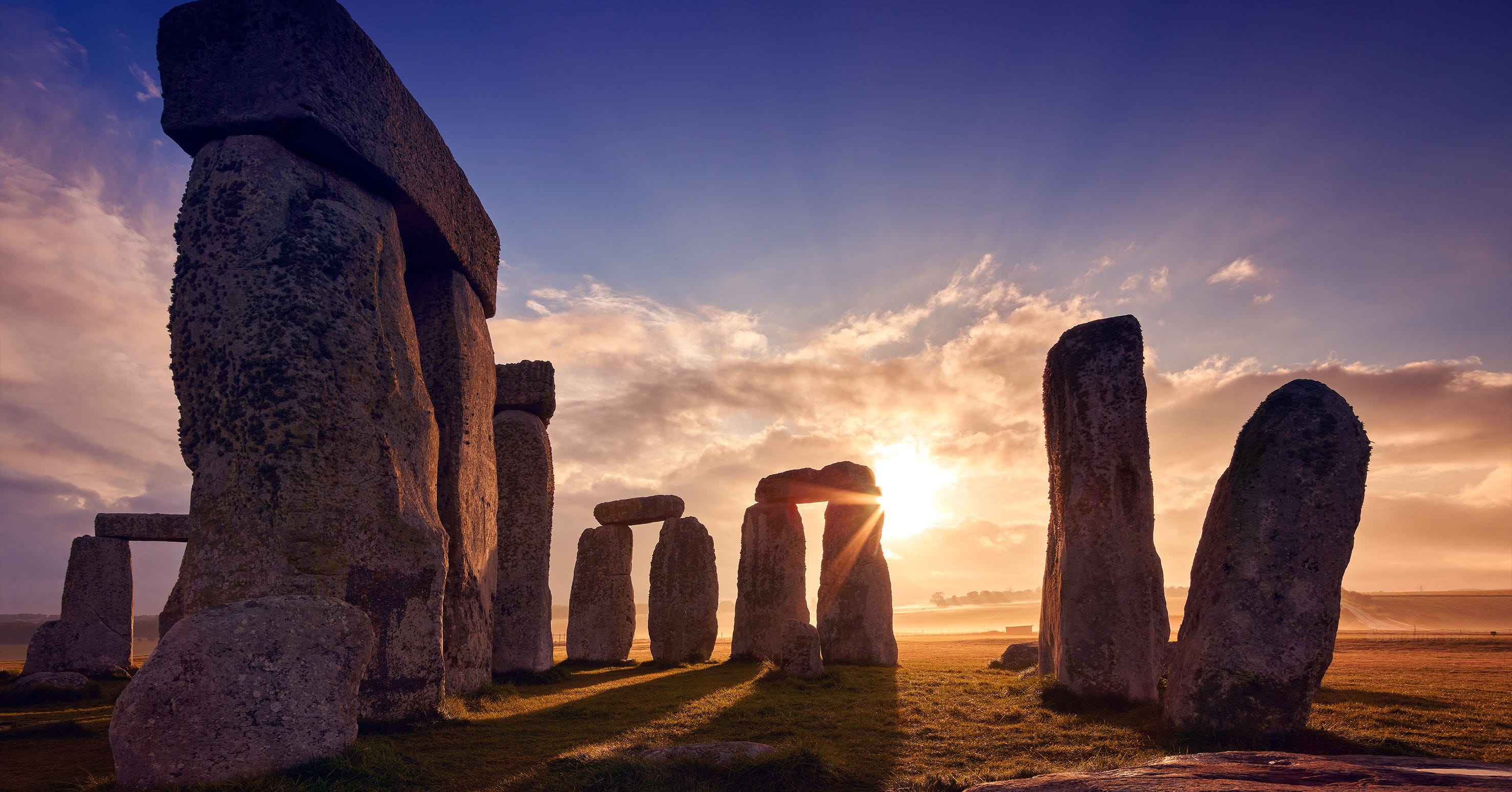
Stonehenge has been generating theories for as long as people have been writing about it. Merlin built it. Romans built it. Druids worshipped at it. It is a calendar. It is a hospital. It is a monument to the dead. It is all of these things simultaneously.
Most of these theories have not stood up to excavation. One of them the monument to the dead hypothesis has recently become considerably stronger, as a series of bioarchaeological studies have established that Stonehenge’s primary function in its earliest phases was as a cremation cemetery of unusual scale and geographic reach. The implications of this finding go well beyond burial practice, because they change the question of who Stonehenge was built for, who was considered worthy of burial there, and where those people came from.
The Cremation Cemetery Finding
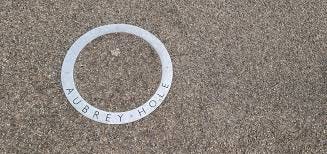
Human remains have been known at Stonehenge since excavations in the early 20th century, but they were poorly documented and many were reburied before systematic analysis was possible. A 2016 analysis led by Christophe Snoeck of Oxford and published in Scientific Reports applied strontium isotope analysis to 25 cremated individuals from the Stonehenge Aubrey Holes a series of 56 pits that form the oldest phase of the monument, dated to approximately 3000 BCE.
The strontium results were striking. While many of the individuals buried at Stonehenge grew up in the local area (consistent with a regional cremation cemetery), a significant proportion had strontium signatures indicating they had spent their childhoods in western Britain Wales, in particular, which is where the bluestones that form the inner ring of Stonehenge were quarried.
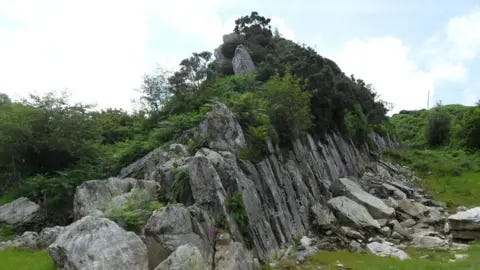
This finding has significant implications. The bluestones were transported approximately 300 kilometers from the Preseli Hills in Wales to Salisbury Plain a feat that has itself been the subject of considerable research and debate. The Snoeck study suggests that the people who came from Wales to be buried at Stonehenge may have had a connection to the bluestone source region. They may, in other words, have been the descendants of the communities that originally quarried and transported the stones people for whom Stonehenge had a specifically Welsh connection, and who were brought back to be buried near the stones their ancestors had moved.
The Scale and Geography of the Cemetery
Further analysis published in 2019 extended the strontium work to additional individuals and found that the non local burials were concentrated in the earlier phases of the monument’s use, with the proportion of locally derived individuals increasing over time. The earliest phase of Stonehenge, in this interpretation, was a monument that drew the remains of people from a wide geographic area a regional or possibly supra-regional cremation cemetery for a select population.
The selectivity is important. Not everyone was buried at Stonehenge. The roughly 200 individuals estimated to have been cremated and buried there over several centuries represent a tiny fraction of the population of Neolithic Britain. Whoever these people were, they were not randomly chosen. They were selected for burial at a monument that required enormous collective labor to build and maintain.
The demographic profile of the buried individuals, where it can be determined from cremated bone, includes both males and females and a range of ages including children. This is not a warrior cemetery or a cemetery exclusively for adult males criteria that sometimes apply to high status Neolithic and Bronze Age burials elsewhere. Stonehenge, in its earliest phase, appears to have been a monument where status was family based or lineage based rather than individually achieved, with membership in certain lineages (possibly including the bluestone quarrying communities of Wales) conferring the right of burial at the monument.
The Durrington Walls Connection
Stonehenge does not stand alone in the landscape. Less than three kilometers away, at Durrington Walls, is a massive Late Neolithic henge and settlement site that appears to have housed large temporary populations possibly the workers who constructed and maintained Stonehenge, or the people who gathered there for seasonal ceremonies.
Excavations at Durrington Walls by Mike Parker Pearson of University College London have found evidence of large scale feasting enormous quantities of pig and cattle bones, mostly from animals slaughtered in late autumn and midwinter, consistent with seasonal gathering. Parker Pearson’s interpretation, developed over more than a decade of fieldwork, is that Stonehenge and Durrington Walls formed a complementary pair: Durrington for the living, Stonehenge for the dead, connected by a processional avenue leading to the River Avon.
This interpretation has considerable evidential support and has been influential in shifting Stonehenge scholarship away from purely astronomical explanations toward a more socially complex interpretation of the monument as the focal point of a landscape organized around the relationship between the living and the dead.
Who built Stonehenge, and why, has been asked for centuries. The most accurate current answer is: several successive communities, over approximately 1,500 years, used the site in ways that changed over time but consistently involved the memorialization of the dead. The earliest phase was primarily a cemetery. Later phases added the large sarsen stone circle and trilithons that define the monument’s iconic appearance. The astronomical alignments the famous solstice orientation are real, but they appear to be integrated into a broader funerary and ceremonial function rather than constituting the monument’s primary purpose.
What the recent bioarchaeological work has added is specificity about who the earliest dead were and where they came from. Stonehenge was not built for a local community alone. The people buried in the Aubrey Holes came from Wales, from the west of Britain, from places that had specific connections to the monument’s materials and possibly its meaning. Somebody decided that people from 300 kilometers away should be brought to this place to be cremated and interred. Whatever that decision reflects about Neolithic social organization, political geography, and beliefs about death and place we are still working it out.
Which raises a question I find difficult to set aside: if the earliest people buried at Stonehenge were from the same communities that quarried the bluestones in Wales, does that mean the stones and the people were making the same journey together? And if so, what does it mean to transport both the dead and the stones they had worked to the same destination?
Roopkund: The Himalayan Lake of Bones

High in the Indian Himalayas, at 5,029 meters above sea level, lies a small glacial lake called Roopkund. For most of the year, it’s frozen solid, indistinguishable from thousands of other remote mountain pools. But when summer comes and the ice retreats, Roopkund reveals its secret: the lake is littered with human bones…
References
Parker Pearson, M. (2012). Stonehenge: Exploring the Greatest Stone Age Mystery. Simon & Schuster.
Parker Pearson, M., et al. (2019). The original Stonehenge? A dismantled stone circle in the Preseli Hills of west Wales. Antiquity, 93(367), 1-16.
Snoeck, C., et al. (2018). Strontium isotope analysis on cremated human remains from Stonehenge support links with west Britain. Scientific Reports, 8, 10790.
Wainwright, G. J., & Darvill, T. (2009). The ages of Stonehenge. Proceedings of the Prehistoric Society, 75, 69-89.
Might the distant remains have belonged to people involved in the quarrying and transportation of the stones?
Might the people who died some distance away have been cremated where they died, and their ashes transported to Stonehenge?