

The Trojan War Was Real, Just Not the Way Homer Told It

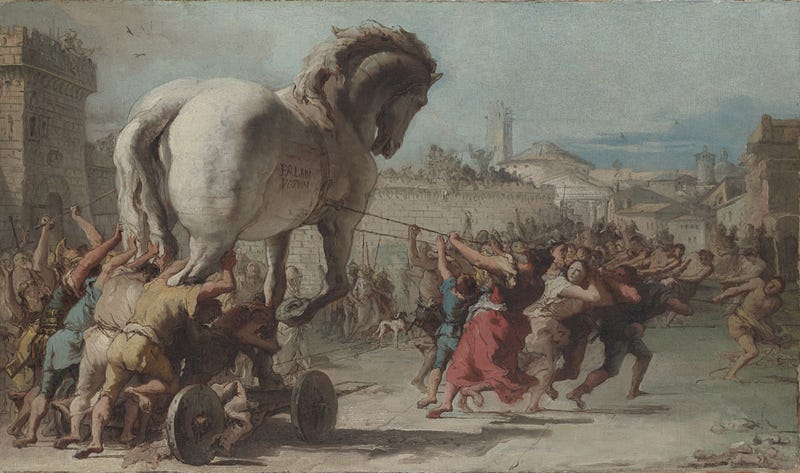
Heinrich Schliemann wanted Troy so badly that he almost destroyed it. When he arrived at Hisarlik in 1871 with a crew of workmen and a head full of Homer, he dug with an enthusiasm that any modern archaeologist would call criminal. He blasted through stratigraphic layers looking for Priam’s palace, and in 1873 he found gold. Jewelry, vessels, ceremonial objects. He called it Priam’s Treasure and announced to the world that he had found Homer’s Troy.
He was off by about a thousand years. The treasure belonged to Troy II, a settlement that predated the traditional dating of the Trojan War by roughly a millennium. Schliemann had, in his excitement, dug straight past the city he was looking for.
That mistake, and the mindset behind it, has shaped Trojan War scholarship ever since. The question driving the research has too often been: which layer matches Homer? Not: what actually happened here, and why? The difference matters, because the answers are genuinely different.
Troy VIIa and What the Ground Actually Shows
The level of Hisarlik that corresponds most closely to the traditional dating of the Trojan War is Troy VIIa, destroyed sometime around 1180 to 1190 BCE. It does show evidence of violent destruction. Burned structures. Unburied human remains. Storage vessels buried under floors, suggesting a population hoarding supplies over an extended period of stress. Walls that had been hastily repaired. These are the signs of a city under pressure before it finally fell.
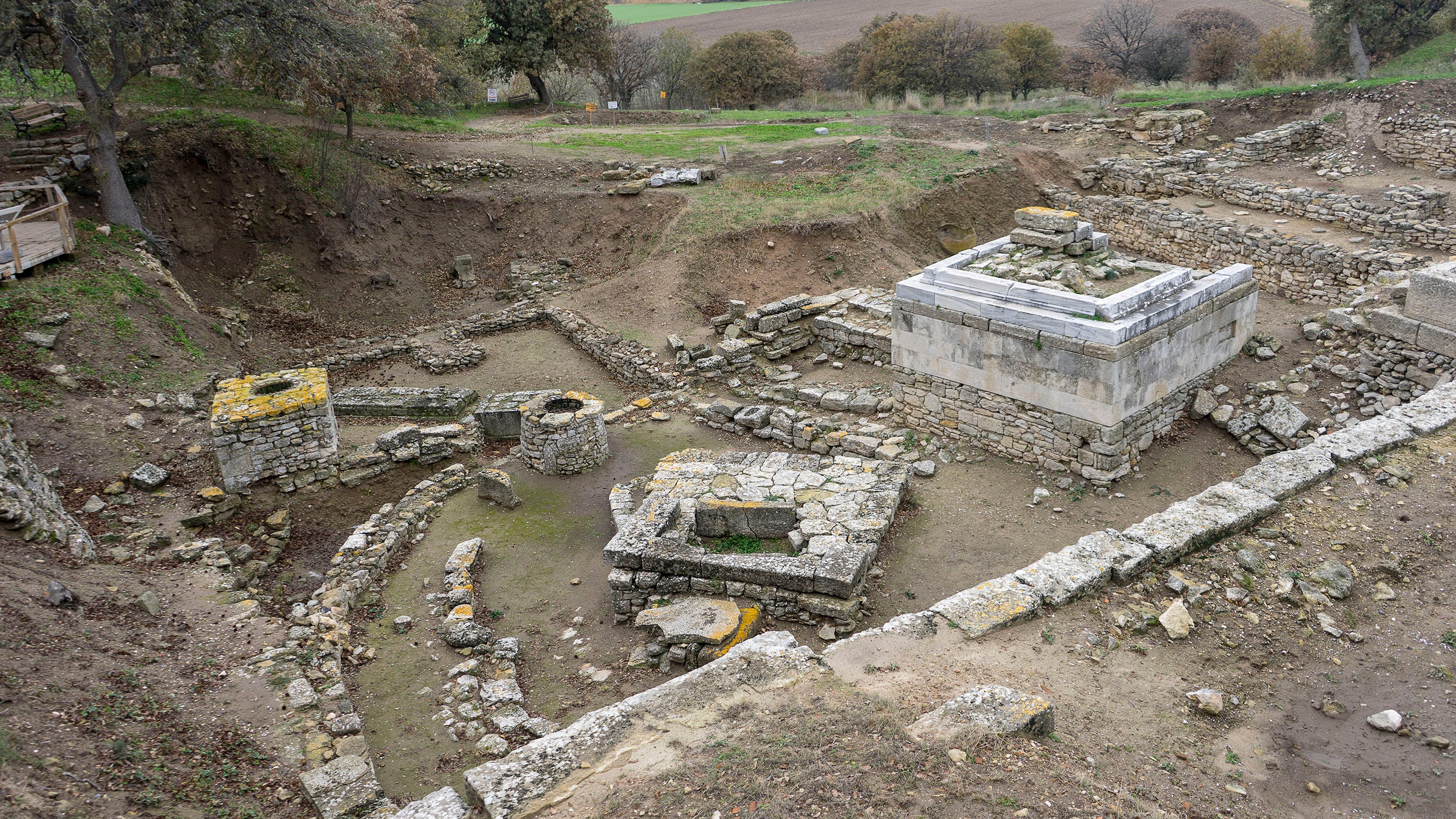
What the site does not show is evidence of a Greek siege. No siege works have been found. No military encampment outside the walls. The pottery evidence from the destruction layer suggests that if attackers came from the Aegean, they arrived in relatively small numbers. The thousand-ship armada of the Iliad has no archaeological footprint at Hisarlik.
The excavations led by Manfred Korfmann between 1988 and 2005 changed the picture significantly. Korfmann’s team discovered that Bronze Age Troy was far larger than previously understood, extending across roughly 75 acres with a population possibly reaching 10,000 people. This was not a minor regional town. It was a substantial urban center sitting at the entrance to the Hellespont, the narrow strait connecting the Aegean to the Black Sea. That position made it one of the most strategically and commercially important locations in the Late Bronze Age world. The question of why someone might have attacked Troy becomes considerably easier to answer once you understand where it sat and what it controlled. It had nothing to do with Helen of Sparta.