


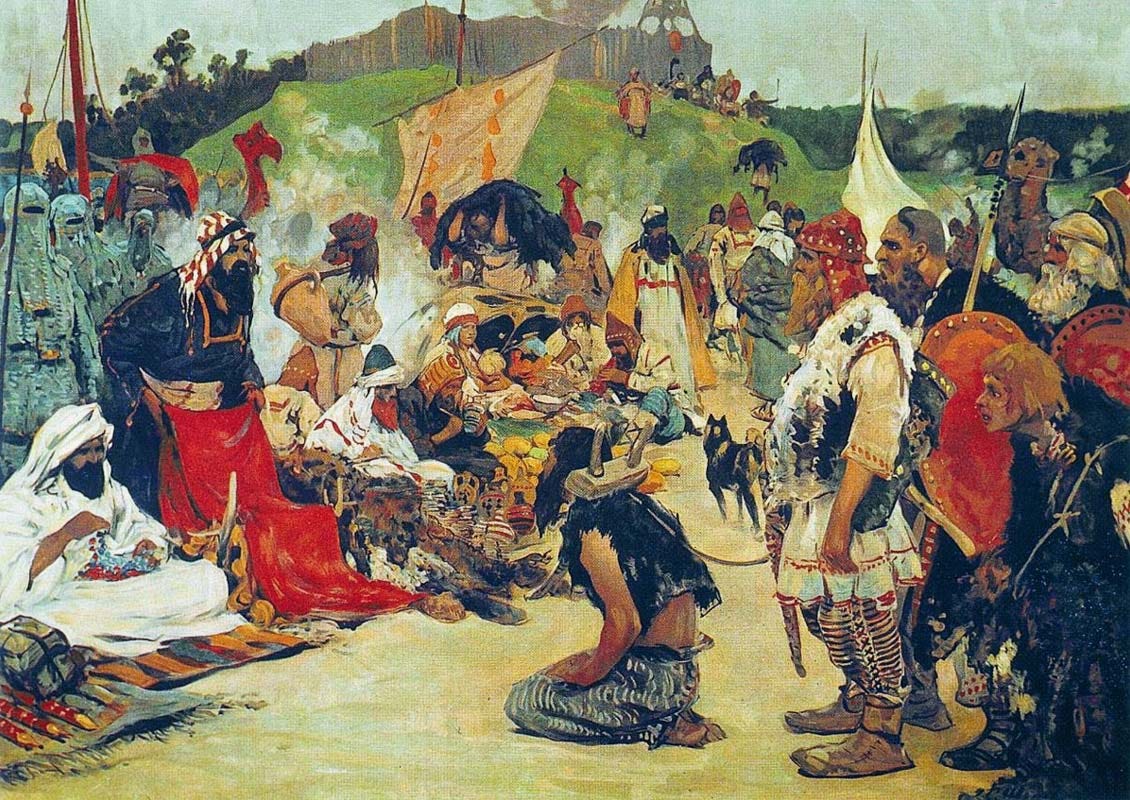
Museum exhibits, blockbuster television, and centuries of romantic retelling have built a version of the Vikings centered on longships, exploration, craftsmanship, and trade in silver and furs. That version is not wrong, exactly, but it leaves out a detail large enough to change the whole picture: a substantial share of the Norse economy during the Viking Age ran on capturing and selling human beings. Enslaved people, called thralls in Old Norse, may have made up somewhere between 10 and 30 percent of the entire Scandinavian population at the height of the era, according to estimates historians have built from legal codes, burial evidence, and contemporary written accounts examined together.
Raiding gets remembered in popular culture largely as smash-and-grab robbery, monasteries stripped of silver and religious treasure by longship crews who then sailed home. Captives were frequently the more valuable, more renewable prize. A captured person could be sold once, resold, put to work indefinitely, or ransomed back to their community for silver, all of which made human trafficking a steady, repeatable revenue stream in a way looted treasure, however impressive, simply was not. Norse raiding functioned, in significant part, as an extraction economy built around labor and people rather than pure plunder.
Thralls: Norse Society’s Bottom Rung
Norse society organized itself into three broad tiers: thralls at the bottom, karls, or free farmers and craftspeople, in the middle, and jarls, the noble and ruling class, at the top. A person could become a thrall by being born to enslaved parents, captured during a raid or war, sold by family members to settle debt, or, in some documented cases, sold into slavery as punishment for certain crimes. Law codes recorded later in places like Iceland and Norway, including the Gragas and the Gulating Law, treated thralls explicitly as property rather than legal persons, with an owner holding significant power over a thrall’s labor, movement, and in some circumstances even their life, subject to limited legal consequence compared to harming a free person. Children born to enslaved parents inherited thrall status automatically, and while manumission existed, a freed thrall, called a leysingi, and their descendants often carried a lingering social stigma for at least a generation afterward.
Norway’s Gulating Law, one of the oldest surviving medieval Scandinavian legal codes, assigned thralls a fixed monetary value for compensation purposes rather than treating harm done to them as a crime against a person in the way harming a free individual was categorized. Killing someone else’s thrall typically required paying the owner compensation roughly equivalent to damaging valuable livestock or property, a legal framework that made the economic logic of the entire system explicit: a thrall’s life mattered to the law primarily as a financial asset belonging to somebody else, not as an individual with legal standing of their own.