

A 1,700-Year-Old Roman Mystery That Experts Say Is Still Drinkable

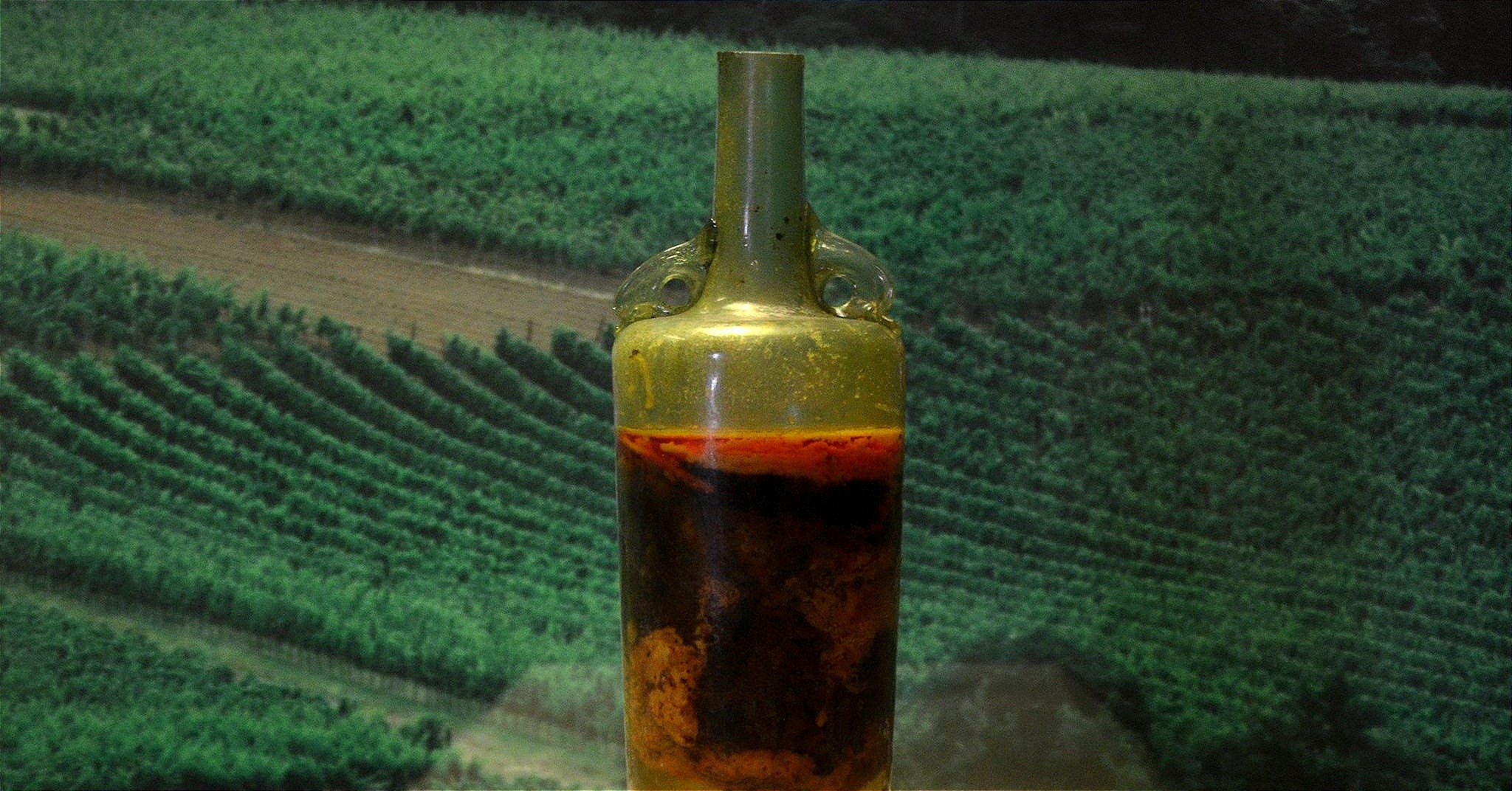
Back in 1867, some workers digging around near Speyer, Germany stumbled across something pretty incredible - a Roman tomb that had been sitting undisturbed for over 1,500 years. Inside were the remains of what appeared to be a wealthy Roman couple, along with all the stuff you'd expect to find buried with well-off Romans: jewelry, personal items, food, and plenty of wine bottles. Sixteen bottles, to be exact.
Now, finding ancient wine bottles isn't particularly unusual. Romans loved their wine, and they believed in taking it with them to the afterlife. What made this discovery special was that out of those sixteen bottles, one was still completely intact. Not just intact - it was still sealed, and you could actually see liquid sloshing around inside.
That bottle is now sitting in a German museum, and it's probably the oldest unopened wine bottle in the world. Scientists date it to around 325–350 CE, making it roughly 1,700 years old. Think about that for a second - this wine was bottled when the Roman Empire was still a thing, long before anyone had heard of France producing wine or Germany having vineyards.
The Romans who ended up buried with this bottle lived during an interesting time. Rome was expanding north, taking over territories that would eventually become modern France and Germany. As they conquered new lands, Roman soldiers and settlers discovered that the locals had some pretty impressive winemaking skills. At the same time, Romans introduced their own techniques to places that had never really focused on wine production before. It was a two-way exchange that changed how wine was made across Europe.
Did you know? Romans worshipped Bacchus as their god of wine, festivals, and celebration. They believed wine wasn't just a drink, it was a divine gift that connected them to the gods, which explains why they considered it essential enough to include in burial preparations.
How Romans Kept Wine Fresh
What's fascinating about this particular bottle is how well-preserved it is. Ancient Romans weren't just randomly throwing wine into containers and hoping for the best. They had specific methods for keeping wine fresh, especially wine that was meant to last. They'd mix in honey and spices - not just for flavor, but for preservation. Then came the clever part: they'd pour a layer of olive oil on top of the wine before sealing the bottle with wax.
That olive oil created a barrier that kept air from getting to the wine. You can still see it today - there's this solid, yellowish blob floating on top of what's left of the liquid. It's been doing its job for nearly 1,700 years.
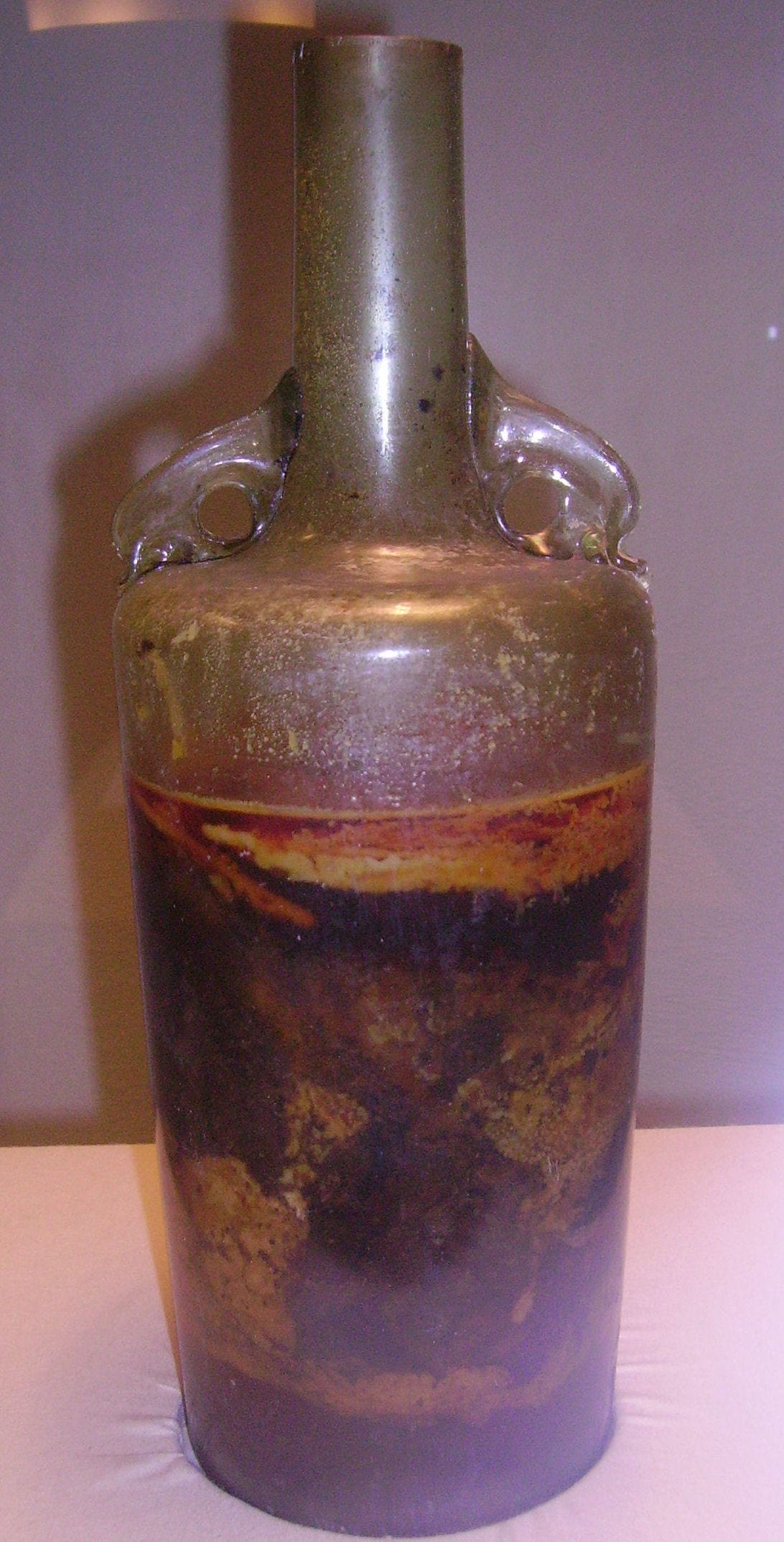

The bottle lives at the Historical Museum of the Palatinate in Speyer, where it's been sitting in the exact same spot for over a century. Only one person on the museum staff, Ludger Tekampe, has ever been allowed to handle it. He admits it feels strange to touch something that old. "We are not sure whether or not it could stand the shock of the air," he told reporters back in 2011.
So what would happen if someone actually opened it? Well, first off, you probably wouldn't want to drink it. Most of what's visible inside the bottle isn't really wine anymore - it's more like a thick, resin-like goop. There might be a sip or two of actual liquid left, but after 1,700 years, all the alcohol has long since disappeared.
Wine expert Monika Christmann has looked at the bottle and concluded that while the remaining liquid probably isn't spoiled in a dangerous way, it wouldn't exactly be a pleasant drinking experience. The museum's Instagram account compared the likely taste to "tasteless chewing gum," which doesn't sound particularly appealing.

To Open or Not to Open
The bigger question is whether scientists should risk opening it at all. Some researchers think modern analysis could reveal important information about Roman winemaking techniques, preservation methods, or even what kinds of grapes they were using. Others argue that once you break that ancient seal, you've destroyed something irreplaceable. It's the kind of dilemma that keeps archaeologists up at night.
For now, the bottle remains sealed and on display, serving as a testament to Roman ingenuity and a reminder of how much we still don't know about daily life in the ancient world. The fact that it survived at all is remarkable, most organic materials from that era have long since decomposed or been destroyed.
The Speyer bottle tells us something important about how Romans approached death and the afterlife. They didn't just bury people with valuable objects; they included practical items that the deceased might actually need. Wine wasn't just a luxury - it was considered essential enough to warrant a place in the grave. That says something about how central wine was to Roman culture and daily life.
Ahh reminds me of the classic publication How to Poison yourself by Hugo First
This discovery is remarkable because it shows how important wine was for the Romans, not only as a drink but also as part of their rituals and beliefs. The Speyer bottle reveals how deeply it was connected to both life and death in Rome. Moreover, the preservation method using olive oil demonstrates an impressive level of ingenuity for its time.